WHEN THE WORLD REACTS, YOUR BRAND SHOULD TOO.
What Is Reactive Marketing?
Reactive Marketing isn’t about chasing trends. It’s about leading conversations online and showing your audience that your brand is paying attention, engaged, and part of the same digital moment they are.
✒️ Paul Rigden
In a marketing world where trends shift by the hour and algorithms reward relevance, reactive marketing has become one of the most powerful ways to grow awareness, engagement, and authenticity without increasing ad spend.
What Is Reactive Marketing?
Reactive marketing is content or campaigns created in response to real-time events, cultural moments, or online trends.
Instead of scheduling months in advance, reactive strategies give brands the ability to respond to what’s happening, immediately. Whether that’s a viral meme, breaking news relevant to their industry, or a cultural moment that fits the brand’s personality, reactive marketing can help link their brand to the rising trend.
In contrast, proactive marketing is planned well in advance, a new product launch, seasonal promotion, or awareness campaign with long lead times and creative approvals.
Both approaches matter. Both approaches are important. But in an online-first landscape where news cycles last hours instead of days, the ability to react quickly is what keeps a brand visible and human.
"
Reactive marketing happens when your brand joins a moment your audience already cares about.
In contrast, proactive marketing is planned well in advance, a new product launch, seasonal promotion, or awareness campaign with long lead times and creative approvals.
Both approaches matter. Both approaches are important. But in an online-first landscape where news cycles last hours instead of days, the ability to react quickly is what keeps a brand visible and human.
Why Timing Is Everything in 2026
Digital platforms have become real-time ecosystems. The faster your brand can identify and act on a relevant moment, the more attention it earns — often without paid media.
Why it matters for online marketers:
Visibility: Platforms like X, TikTok, and Threads push time-relevant content higher in feeds.
Engagement: Posts tied to trending topics generate up to 4× higher interaction rates (Brandwatch, 2025).
Authenticity: Responding naturally to shared moments humanizes your brand.
Efficiency: Agile posts can outperform large-budget campaigns when executed at the right time.
Tip: In reactive marketing, speed often beats production value. A clever, timely post can outperform a polished ad.
Real-Time Marketing Wins
Reactive marketing works best when brands balance speed, tone, and cultural fit. Here are some brand-safe examples that illustrate how it’s done right:
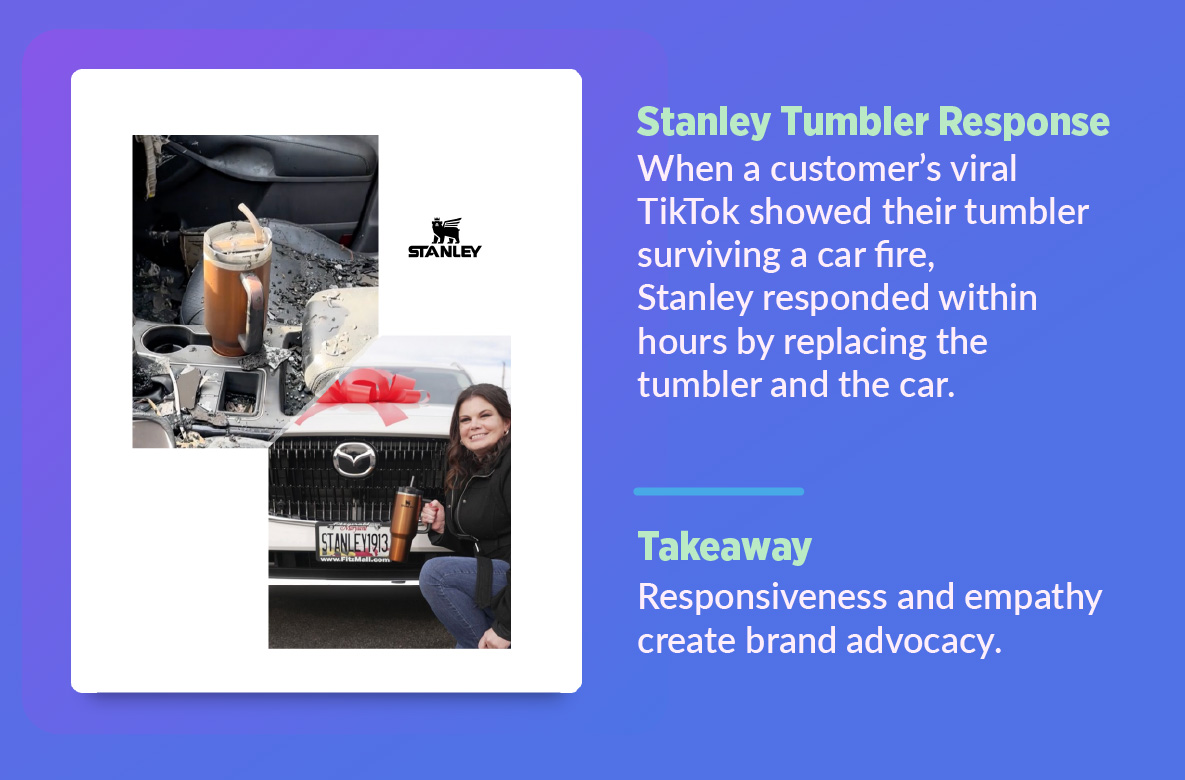
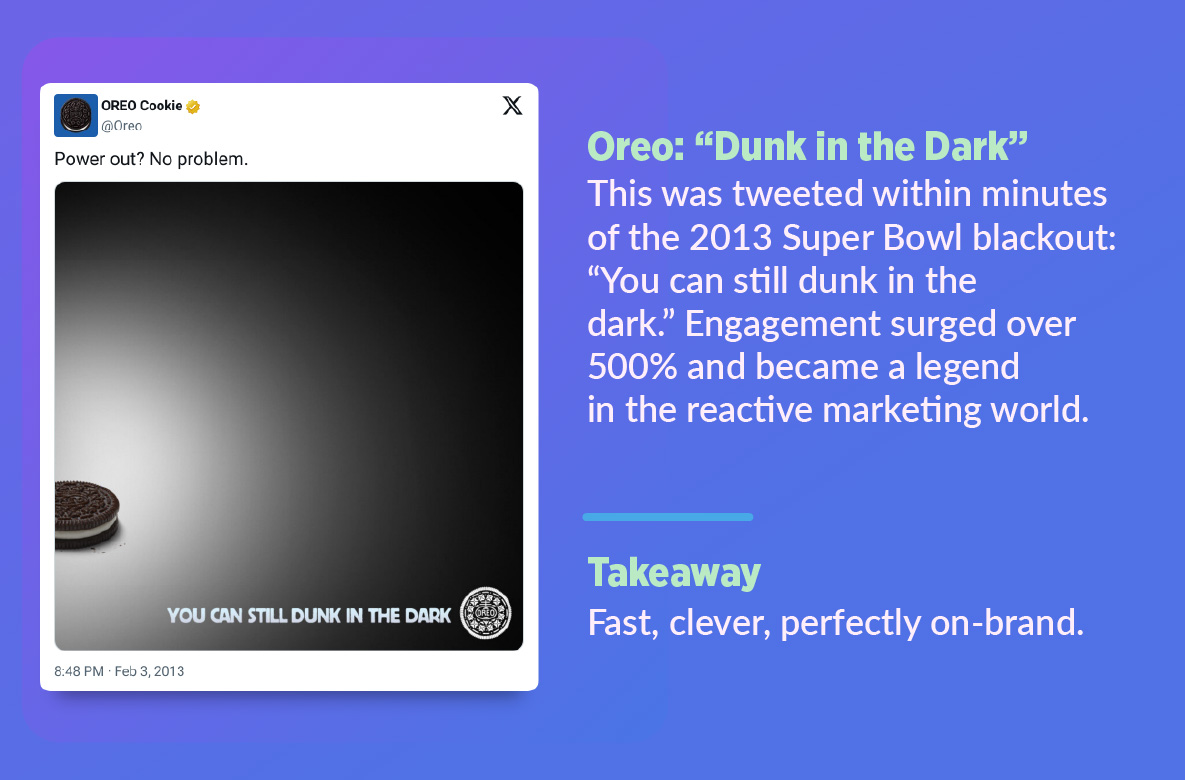
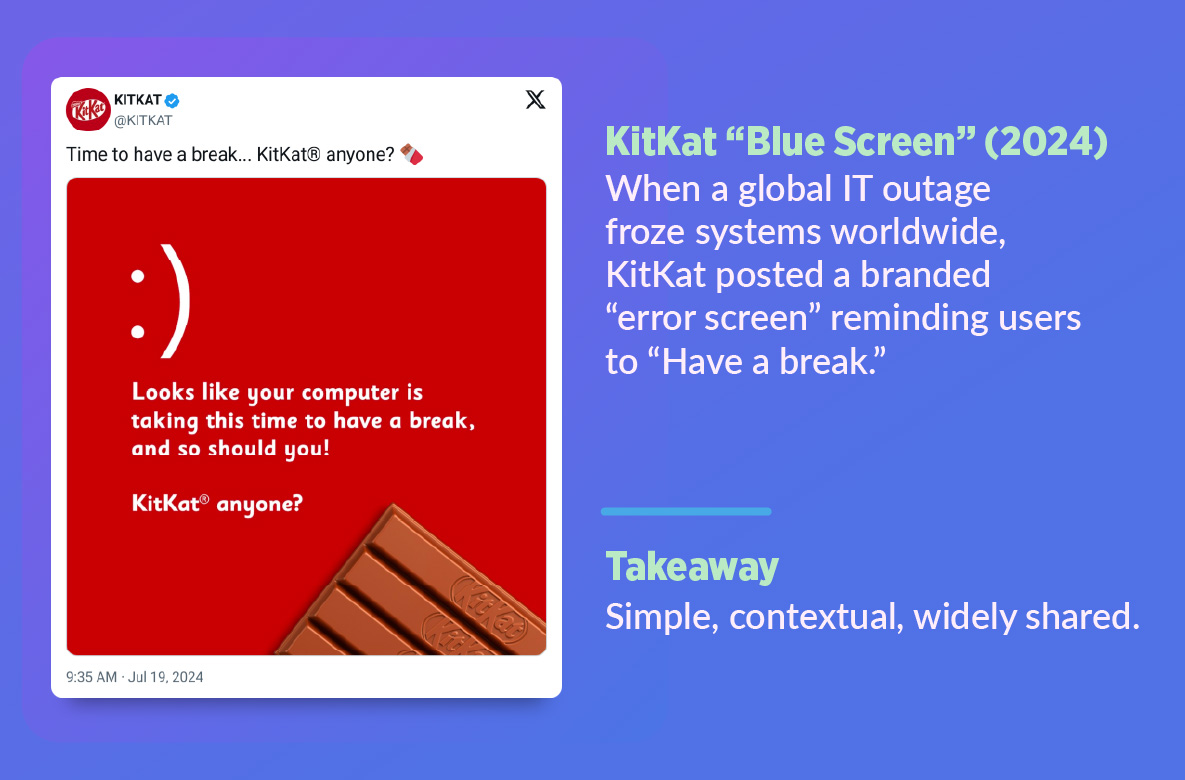
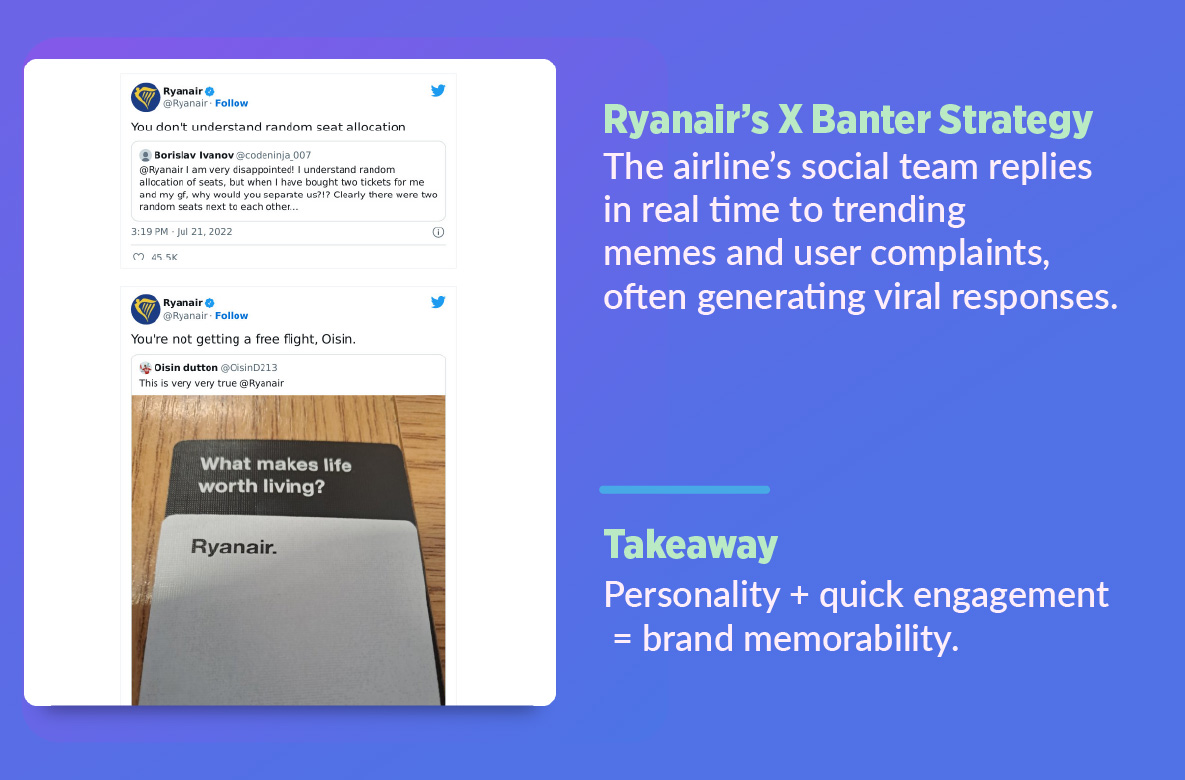
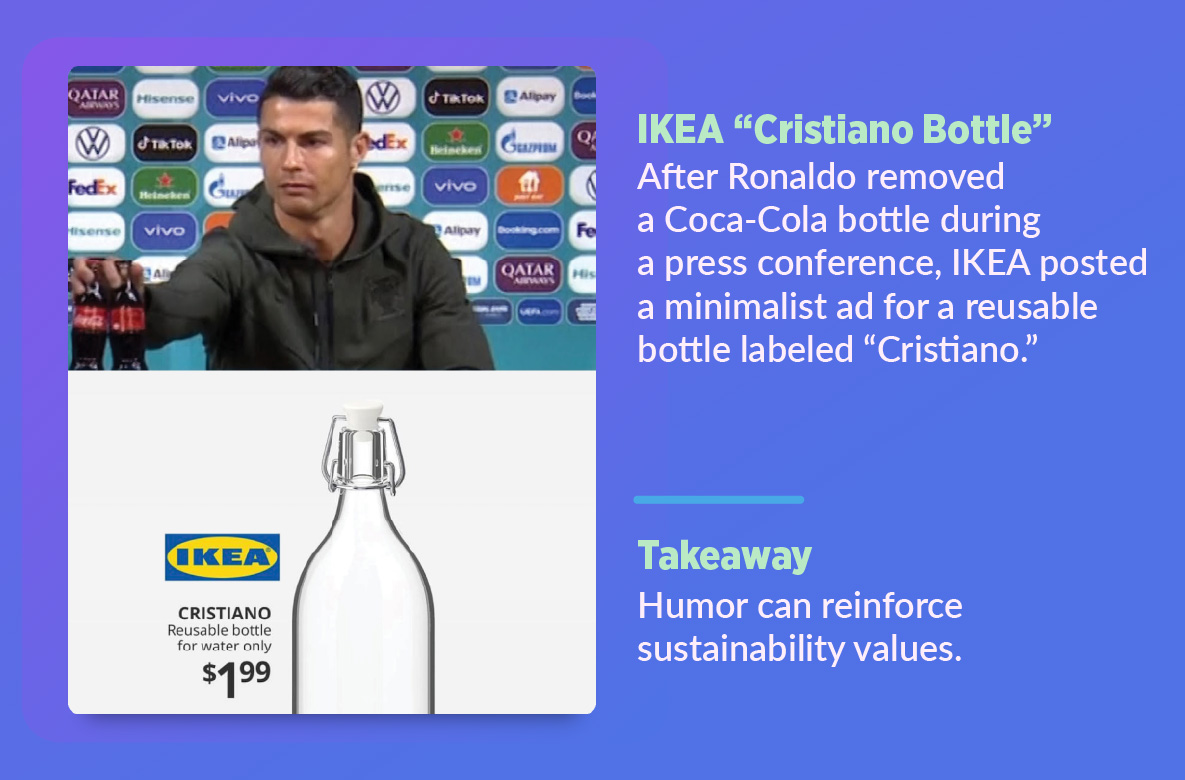
Each of these moments succeeded because teams were empowered to act fast, within defined brand guidelines.
Reactive marketing isn’t luck: it’s process, readiness, and trust.
The Risks, and How to Avoid Them
Reactive marketing carries high rewards but also real reputational risks if mishandled. Online audiences are quick to amplify both cleverness and pile on to mistakes.
Tone missteps: Humor that misreads the room or trivializes a situation.
Late reactions: Joining a trend too late makes posts look opportunistic and out of touch.
Over-automation: AI-generated responses without human review risk sounding generic or tone-deaf.
Approval delays: Overly rigid workflows prevent teams from publishing in the moment.
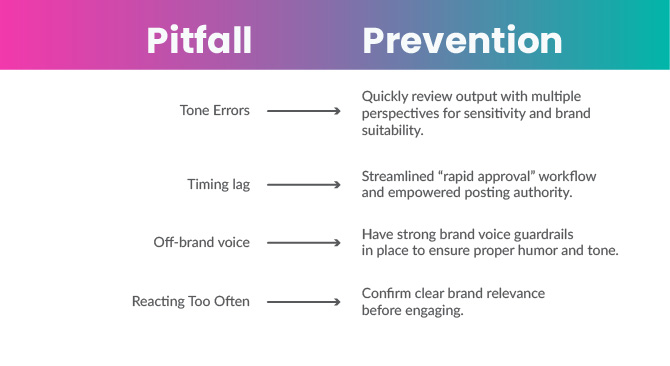
Remember: In reactive marketing, you don't have to join every conversation. The best brands know when to stay quiet.
The Reactive Marketing Playbook
To execute successfully, your team needs both agility and alignment.
Here’s a workflow proven to help digital teams respond quickly while staying on brand:
Monitor: Track live social and news feeds with tools like Google Trends, Reddit, and social listening dashboards.
Identify: Flag stories or events relevant to your brand values or audience interests.
Draft Fast: Use AI tools such as ContentEngine to generate first-draft posts or captions.
Review Quickly: Have a short, cross-functional approval path (marketing lead + brand voice check).
Publish: Post within 1–3 hours of the trend’s peak for maximum visibility.
Measure: Track engagement rate, sentiment, and share velocity to inform future reactions.
Insight: “Content published within 3 hours of a trend’s peak sees 2.7× higher engagement.” — Brandwatch, 2025
Where Reactive Marketing Lives Online
Reactive marketing thrives in digital spaces built on immediacy. Each platform requires a slightly different approach.
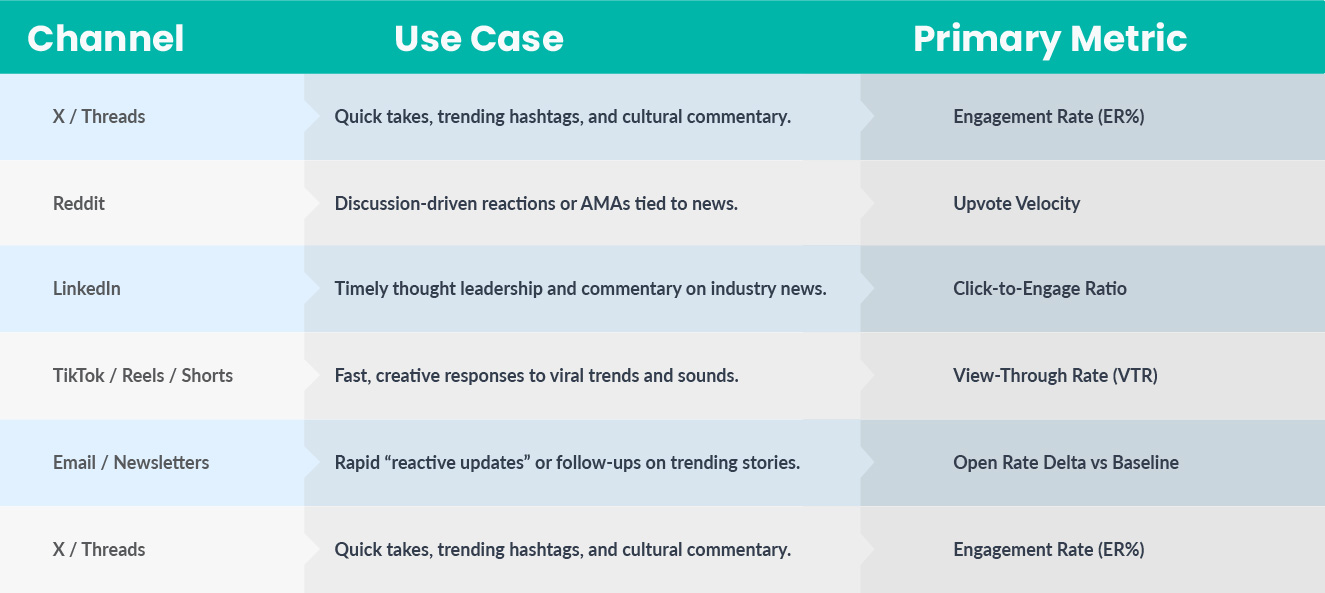
Reactive campaigns don’t replace long-term content strategy, they complement it, keeping your brand present while larger campaigns unfold.
How ContentEngine Enables Reactive Marketing
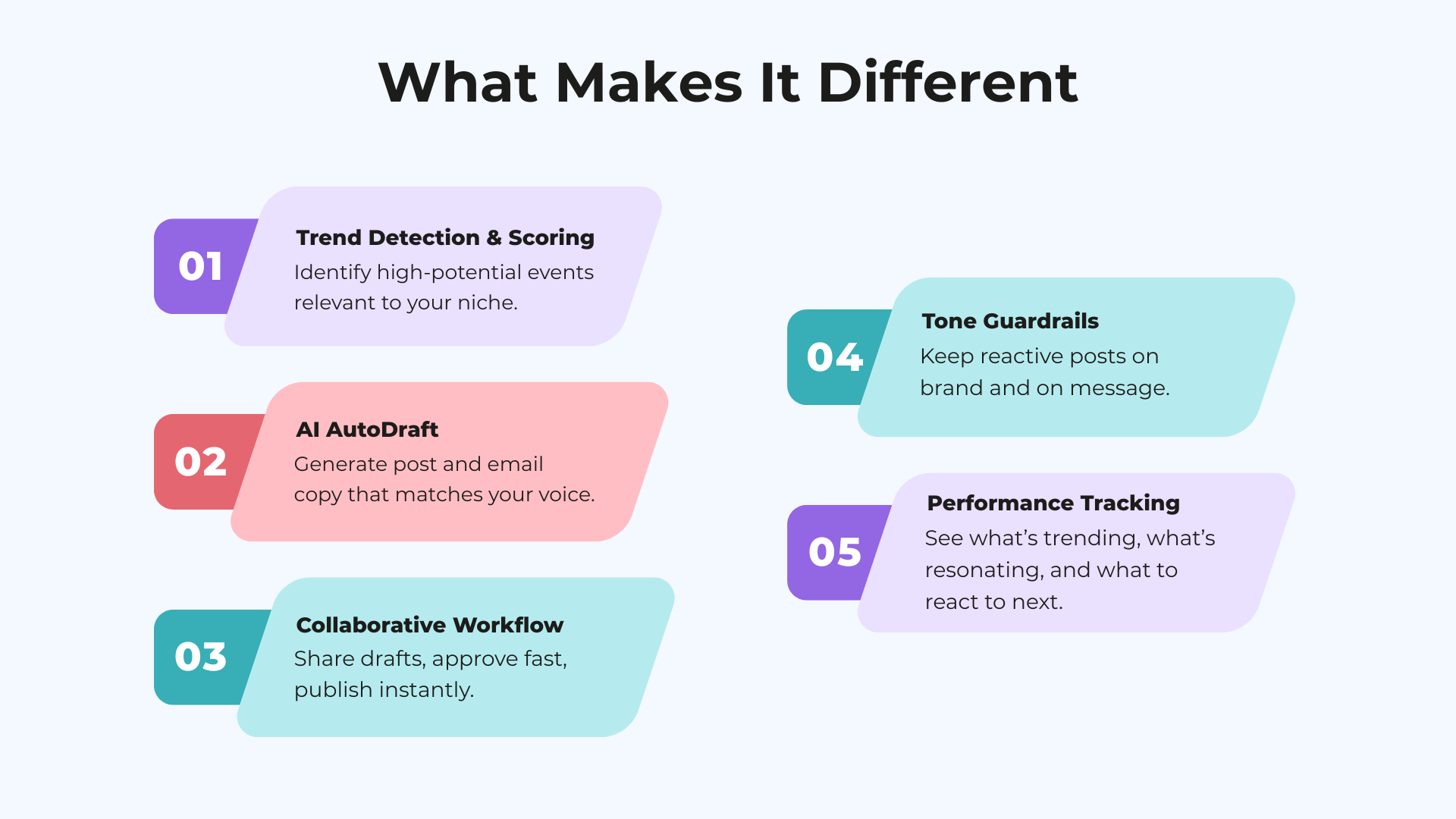
Most marketing tools are designed for scheduling. ContentEngine was designed for responding.
It continuously monitors social, search, and news activity in real time, spotting emerging topics before they peak and drafts brand-aligned content instantly.
Teams can review, edit, and publish within minutes.

Reactive marketing is no longer optional, it’s a competitive skill. Audiences expect more from the brands they care about. They want them to be responsive, aware, and engaged in the same conversations they’re having online.
When done right, reactive marketing turns trends into traffic, engagement into loyalty, and everyday happenings into opportunities for connection.
Use real-time insights, creative agility, and tools like ContentEngine to stay current, without the burnout.