Yelp Could Lose Its Identity in the Race for AI Distribution
The OpenAI partnership could expand Yelp's reach while weakening the direct user relationships and brand recognition that made the platform valuable.

|
Posted: July 28, 2026 |
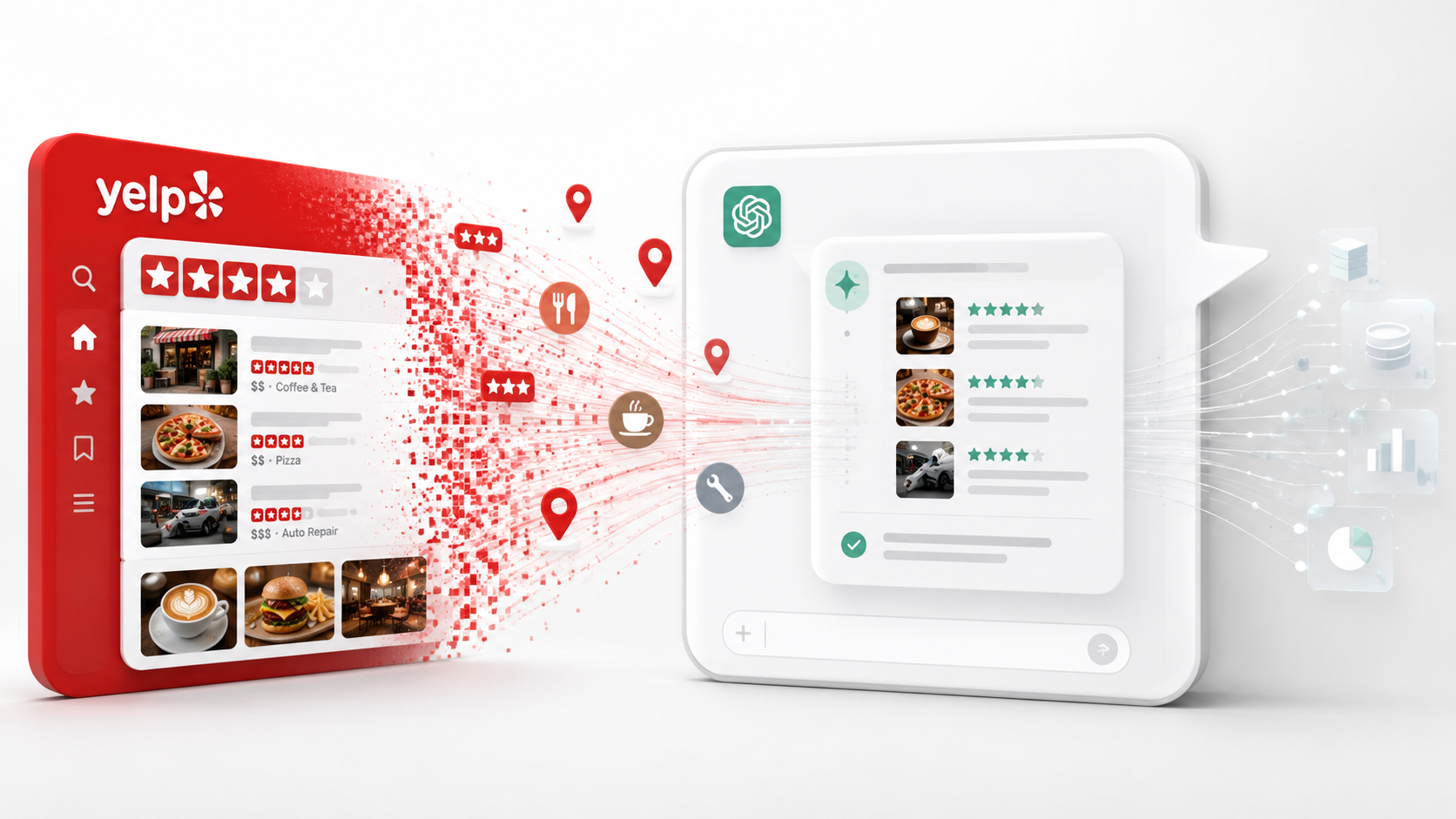
Yelp's recent partnership with OpenAI to integrate its reviews, ratings, and photos into ChatGPT responses sounds like a strategic win on paper. The deal extends Yelp's reach, leveraging AI to distribute its content to millions of ChatGPT users seeking local business recommendations. But beneath the surface of this licensing agreement lies a troubling question: Is Yelp sacrificing its brand identity to become just another data supplier in the AI economy?
Becoming Invisible Infrastructure
When users ask ChatGPT for restaurant recommendations or plumber referrals, they'll receive Yelp data seamlessly woven into AI-generated responses. Sure, Yelp branding and links will appear alongside the information, but the user experience fundamentally shifts. Instead of visiting Yelp's platform, engaging with its community features, and exploring its interface, consumers now interact with Yelp's content through OpenAI's lens.
This transformation from destination to data source represents a significant strategic risk. Yelp has spent two decades building a recognizable brand centered on community-generated reviews and local discovery. By feeding its proprietary content into ChatGPT, Yelp risks becoming invisible infrastructure - essential to the answer, but forgettable to the user.
The Engagement Dilemma
Yelp's value proposition has always extended beyond raw data. The platform encourages users to read multiple reviews, compare photos, check business hours, explore related establishments, and contribute their own experiences. This engagement cycle creates network effects that strengthen Yelp's moat and generate advertising revenue.
But when ChatGPT synthesizes Yelp reviews into concise recommendations, users get quick answers without the friction that drives platform engagement. Why click through to Yelp when the AI has already digested the reviews and delivered a verdict? The planned "Request a Quote" feature might drive some conversions, but it doesn't replicate the rich interaction that defines the traditional Yelp experience.
Who Captures the Consumer Relationship?
The partnership reveals a broader power dynamic in the AI era. Traditional platforms like Yelp built their businesses by owning the consumer relationship. Users came to Yelp, developed usage habits, and returned repeatedly. This direct relationship enabled Yelp to understand user behavior, optimize experiences, and monetize through targeted advertising.
With ChatGPT serving as the interface, OpenAI now owns the primary consumer relationship. The AI assistant becomes the trusted advisor, while Yelp relegates itself to being a cited source. Over time, users may develop loyalty to ChatGPT's recommendation engine without forming any meaningful connection to Yelp as a brand.
The Commodification Risk
Yelp isn't the only local business data provider in the market. Google has massive amounts of review data, as do platforms like TripAdvisor and specialized directories. The Axios report notes that Yelp's agreement doesn't prevent licensing to other AI companies - but this non-exclusivity cuts both ways.
If multiple AI assistants can license Yelp data, and those same assistants can also license competing data sources, Yelp's content becomes commodified. The unique value proposition erodes when users can access similar local business information through any AI interface, regardless of whether it's powered by Yelp, Google, or emerging competitors.
The Traffic Question Nobody's Asking
Yelp executives would likely point to increased distribution as the partnership's core benefit. More exposure means more potential customers discovering businesses through Yelp data. But exposure and engagement aren't equivalent.
If ChatGPT users rarely click through to Yelp's platform, the partnership generates awareness without meaningful traffic growth. Yelp's advertising business depends on businesses wanting visibility on Yelp's platform specifically - a value proposition that weakens if consumers increasingly access Yelp data through AI intermediaries.
What Yelp Should Be Worried About
Over time, Yelp faces an identity crisis. Is it a consumer-facing platform where people discover and share local business experiences? Or is it a B2B data provider licensing content to AI platforms? These two identities require fundamentally different strategies, capabilities, and value propositions.
The undisclosed financial terms of the OpenAI deal matter enormously. If Yelp receives substantial licensing revenue that offsets potential platform traffic losses, the partnership might prove economically rational in the short term. But sustainable competitive advantage comes from irreplaceable market positions, not licensing deals that could evaporate when contracts expire or competitors offer better terms.
Yelp should be asking harder questions: What happens when OpenAI develops its own review aggregation capabilities? What leverage does Yelp maintain if ChatGPT becomes users' primary local search interface? How does Yelp prevent brand dilution when its content is presented alongside data from multiple sources in AI responses?
The partnership with OpenAI might deliver short-term distribution gains and positive press coverage. But strategic success isn't measured in momentary wins - it's measured in long-term positioning. Yelp's decision to become an AI data supplier might prove to be the moment when a distinctive consumer brand began its slow fade into invisible infrastructure.
Sources
- axios.com - Yelp partners with OpenAI to surface reviews in ChatGPT
- searchengineland.com - ChatGPT gains access to Yelp reviews, ratings and photos
- thekeyword.co - Yelp Partners With OpenAI to Bring Reviews to ChatGPT
- reddit.com - Yelp partners with ChatGPT!
- synpost.synup.com - Yelp is now inside ChatGPT. Most of you can relax