
AI Agents will never be Oscar Wilde, but they make a hell of a Walter Cronkite
Both men’s words captivated the world, but in very different ways. One was a creative genius, the other shaped a nation’s global perspective.
Understanding how to use AI as a journalist, not an artist, can help you quickly generate great writing while avoiding AI slop.
✒️ Paul Rigden
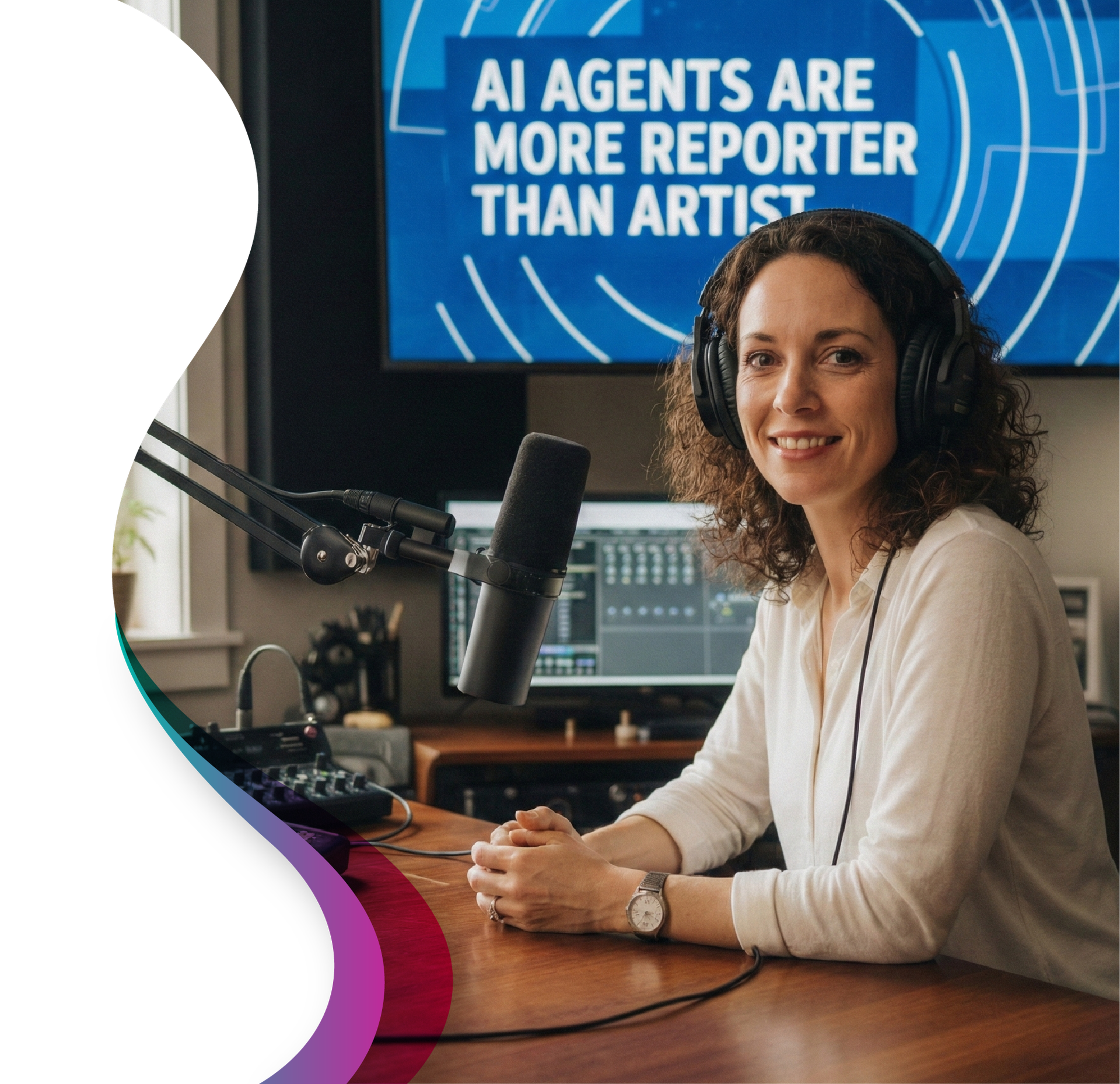
Oscar Wilde wrote “Most people are other people. Their thoughts are someone else's opinions, their lives a mimicry, their passions a quotation.” A great line in its time, it might be even more relevant now when applied to AI. Trained on giant corpuses of internet text, a language model’s thoughts, opinions, and passions all belong to other people. If it’s trained on enough data, those thoughts and opinions all kind of mush together and come out as a meandering stream of consciousness that never gets to the point. It’s a phenomenon known as AI slop. The predictive nature of how AI generates its responses makes it difficult to train large language models that are both broad and specialized, meaning it’s a real challenge to get legitimate creative talent or unique points of view, even out of cutting edge models (we cover that topic in more detail here). The result is AI agents that are great at tasks like analysis and reporting, but lack true creative ability. AI can summarize a large research paper in seconds, but fail to come up with a funny joke or clever metaphor.
Wilde was one of the most obviously brilliant writers of his day. Every line was clever, poetic, and insightful. It’s clear he wouldn’t have thought much of a lot of the writing produced by AI these days. But does that mean AI writing is just slop? Not at all. Content creators just need to understand how to play to AI’s strengths, and avoid its weaknesses.
"
AI can summarize a large research paper in seconds, but fail to come up with a funny joke or clever metaphor
Walter Cronkite: A Voice of Reason
On February 27, 1968, Walter Cronkite stopped a war by speaking into a microphone. He reported on a recent attack by the Viet Cong, called the Tet Offensive. His news program was watched by millions, and turned the tide of US public opinion against the war in Vietnam, spelling the beginning of the end of a conflict that had lasted over a decade. The irony was that the attack had been an abject failure for the Viet Cong in military terms - the US successfully repelled the invading forces on all fronts. The surprise attack, which came early in the morning on the Vietnamese holiday of Tet, was intended to overrun a number of US installations and spark a local uprising. It achieved neither of those objectives, resulting in heavy losses for the North Vietnamese. So why would the US, a country who had been at war for over a decade, have such a negative reaction to hearing about a battle we had won?
The answer is that Cronkite didn’t just report on the battle, he also reported his perspective on the war: "To say that we are mired in stalemate seems the only realistic, yet unsatisfactory, conclusion". Those words, along with the overall tone of his segment, made it clear to the public that despite winning the battle, war was far from over. This bleak outlook from a trusted news anchor changed the minds of a war-weary public at a time when the military was pulling out every stop to keep morale high. It proved to be a pivotal point in ending the war, and it probably saved the lives of tens of thousands of people. Plain-spoken, frumpy, middle-aged Walter Cronkite had none of the charm or blinding talent of Oscar Wilde, but he had an impact on the world that Wilde never did.
Make Your Writing Great By Adding Perspective
Cronkite’s impact on the world illustrates the power of perspective. There are many ways to have an impact, and you don’t need wit and charm if you’re armed with information and perspectives that people care about. You may not be a news anchor with millions of viewers, but you can have a real effect on your community with a lot less work than it took in 1968. For Walter Cronkite to research and give his report, he had to fly himself and a news crew to Vietnam! Now, endless content from real people around the world is available in a few seconds. The internet is a virtual plane ticket to anywhere you need to go, and you have a camera and typewriter in the palm of your hand. CBS needed a team of writers and editors to do the research and script work for a single segment. Now, that could easily be accomplished by an AI agent with a few prompts. All that’s missing is the perspective. AI can do the leg work, it just needs someone to give it an original point of view. That’s what changes an ‘AI slop’ news update into something meaningful.
You understand your community in a way that AI never will. Knowing what kind of messages and perspectives will resonate with a particular audience is an extremely subtle thing. By reacting to trending events in a meaningful way (and using tools like ContentEngine to help you do it), you can quickly and easily generate content that grows your brand, and makes a legitimate connection with your audience. Not every news or social feed needs to be about changing the world, but the best ones all find their own way to have a meaningful audience impact, and that means having perspective.