Reactive Marketing Works Best When Brands Refuse to Let Others Define the Conversation
When Samsung tried to hijack Duolingo's joke about Apple's iPhone Duo, the language-learning app had a choice: play along and become a supporting character in Samsung's competitive narrative, or stay weird. Duolingo chose weird.

|
Posted: September 11, 2026 |
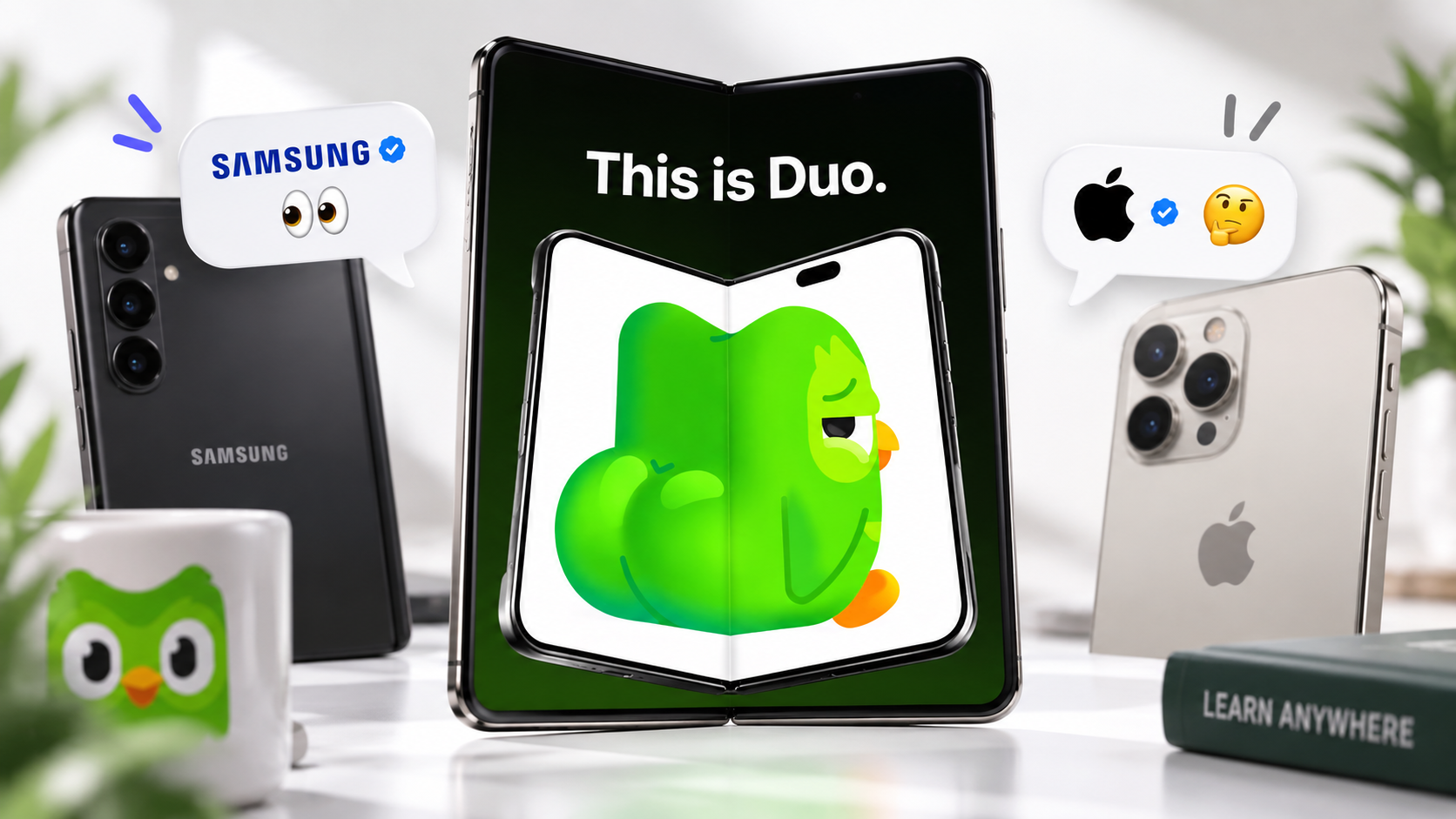
The exchange started predictably enough. Apple announced the iPhone Duo, its first foldable phone, and Duolingo immediately claimed Apple had named a device after its mascot. Samsung's social team saw an opportunity and jumped in with "They copied us too #Solidarity," attempting to frame both Duolingo and itself as victims of Apple's alleged imitation.
Duolingo's response-calling Samsung an "ugly stranger" claiming to be its twin-turned what could have been a standard pile-on into something messier and more interesting. The reply didn't help Samsung make its point about foldable phone history. It didn't create a unified front against Apple. Instead, it made Samsung part of the joke, which is exactly what kept Duolingo's brand voice intact.
That distinction matters more than it might seem. Reactive marketing works when speed meets cultural fluency, but it fails the moment a brand starts sounding like it's reading from someone else's script.
The Samsung Play Was Smart Until It Wasn't
Samsung had legitimate grounds for the joke. The company has been making foldable phones since 2019, iterating through multiple Galaxy Z Fold generations while Apple sat out the category entirely. When Apple finally entered the market, Samsung's positioning as the experienced player wasn't manufactured-it was factual.
The Duolingo tag made strategic sense too. Instead of posting yet another "we did it first" claim that would sound defensive, Samsung tried to borrow momentum from a joke that was already moving through social feeds. The tactic compressed a product-history argument into a format that felt native to the platform.
What Samsung couldn't control was Duolingo's willingness to cooperate. Brand accounts aren't props. They have their own incentives, their own audiences, and-if they've done the work-their own recognizable personalities. Duolingo built its social presence around Duo being chaotic, needy, and occasionally hostile. Letting Samsung position it as a friendly ally would have been off-brand, even if the alliance made tactical sense.
The "ugly stranger" reply wasn't just a punchline. It was Duolingo protecting the character it had spent years building. That character doesn't team up with tech companies to make competitive points. It makes jokes about being named after a foldable phone and then refuses to let anyone else control where the joke goes next.
Synopsis
The article describes a social media exchange where Duolingo humorously referenced Apple's new iPhone Duo, leveraging the coincidence with its mascot's name, and Samsung joined the banter to position itself as a pioneer in foldables. Duolingo maintained its distinct playful persona by rejecting Samsung's attempt to ally, creating a dynamic, character-driven interaction rather than a traditional corporate partnership. The piece highlights how brands increasingly use social accounts as ongoing characters participating in internet culture, making reactive marketing more engaging and authentic when grounded in consistent brand voices and real product truths.
Reactive Content Shouldn't Replace Brand Voice
The failure mode in reactive marketing isn't usually bad timing or picking the wrong trend. It's forgetting who you are in the rush to seem relevant.
Brands that chase every viral moment without a consistent voice end up sounding like they're performing someone else's personality. The content might get engagement, but it doesn't build recognition. Audiences can tell when a social team is just trying to ride a wave versus expressing something that actually fits the brand.
Duolingo's response worked because it was consistent with everything the account had done before. The tone, the hostility, the refusal to be agreeable-none of it required explanation. People who follow the account know Duo can be dismissive. The surprise wasn't that Duolingo rejected Samsung's framing. The surprise was how quickly and specifically it did so.
That's the advantage of having a defined social persona before the moment arrives. When Apple announced the iPhone Duo, Duolingo's team didn't need to invent a response from scratch. They already knew what Duo would say because they'd been writing that character for years. The reactive part was recognizing the opportunity. The execution was just being themselves in public.
Samsung had the same advantage. The brand's social accounts have a history of trolling Apple launches, particularly around features Samsung introduced first. The foldable-phone jab wasn't out of character. What made this exchange different was that Duolingo had its own script and no interest in following Samsung's.
Speed Matters, But Only If the Character Is Already Built
One reason reactive marketing often feels forced is that brands try to manufacture both the voice and the response simultaneously. They see a trending topic, convene a meeting, draft options, get approvals, and post something that arrives too late and sounds too cautious.
The brands that move quickly on reactive opportunities usually have something else in place: a clear sense of how their account is supposed to behave. That clarity doesn't come from a single viral post. It comes from consistency over time, which gives social teams permission to make fast decisions because the range of acceptable responses is already defined.
Duolingo didn't need executive approval to call Samsung an ugly stranger. The account's personality supports that kind of reply. Samsung didn't need a committee to decide whether trolling Apple was on-brand. Both teams could move quickly because the character was already established.
That doesn't mean every brand needs to be chaotic or confrontational. It means the voice should be recognizable enough that teams can improvise within it. Reactive content works when the creative question is "what would our character say?" rather than "what should a corporation say?"
The latter question produces content that sounds like it came from a legal review. The former produces content that sounds like someone with a personality showed up to the conversation.
Our Perspective
Reactive marketing means joining conversations quickly, but that doesn’t mean surrendering your brand voice to whoever speaks next. When Samsung entered Duolingo’s moment, Duo could have let the exchange become Samsung’s story. Instead, the brand doubled down on its own humor and message. The lesson is simple: react to others, but make sure the response still sounds unmistakably like you.
The Product Story Still Needs to Be There
Samsung's entry into the Duolingo exchange wasn't purely performative. Underneath the banter was a real competitive claim: we've been making foldable phones for years, and Apple is late.
That message didn't disappear when Duolingo refused to play along. If anything, the exchange made the point more visible because it attached Samsung's product history to a joke that was already getting attention. People who might not care about foldable-phone timelines still saw the exchange, which meant they saw Samsung's framing.
Reactive marketing fails when the cultural reference is just decoration around a message that doesn't connect to anything real. A brand account quote-tweeting a trending topic with "This is so us!" and a product link doesn't work because there's no actual relationship between the trend and the brand. It's just opportunism without substance.
Samsung's response had substance because the brand genuinely does have a longer history in foldables. Duolingo's response had substance because Duo genuinely is a character that would reject an unwanted alliance. The humor was real, but so was the positioning underneath it.
That combination-speed, personality, and an actual point-is what separates reactive content that builds brand equity from reactive content that just chases engagement metrics and then disappears.
Other Brands Are Participants, Not Set Pieces
One thing Samsung learned in this exchange is that tagging another brand opens the door for that brand to take the conversation somewhere unexpected. Duolingo could have ignored the tag. It could have played along. Instead, it turned Samsung into part of the joke.
That's the risk of treating other brands like supporting characters in your narrative. They have their own narratives, and if their social presence is strong enough, they'll use your setup to advance their own story instead of yours.
The unpredictability is actually part of what makes these exchanges feel authentic. Scripted brand partnerships are easy to spot because everyone stays on message and the interaction feels like a planned activation. When brands genuinely improvise in public, the result is messier, but it also feels more like actual conversation.
Duolingo's response to Samsung wasn't designed to make Samsung look good. It was designed to keep Duo's personality consistent and get a laugh. That's what gave the moment cultural traction. If both brands had just agreed to roast Apple together, the exchange would have been forgettable. The turn is what made it interesting.
For marketers, that means reactive strategies need to account for the possibility that other participants won't follow the script. You can tag another brand, but you can't control what they say next. The best you can do is make sure your own voice is strong enough that even an unexpected response doesn't pull you off-brand.
Common Mistakes
Common pitfalls hinder the effectiveness of reactive marketing campaigns.
- Ignoring brand voice — Losing uniqueness in an attempt to fit into viral trends.
- Late responses — Missing the conversation window, making reactions irrelevant.
- Over-corporatizing tone — Using jargon or formal language that feels forced.
- Lack of preparation — Not having a brand personality developed enough for nimble replies.
- Overreacting to competitors — Engaging in negative exchanges that dilute brand image.
What Actually Matters in Reactive Marketing
The Duolingo-Samsung exchange won't change anyone's phone-buying decisions. Apple's iPhone Duo will succeed or fail based on product quality, pricing, and distribution, not because two other brands made jokes on social media.
But the exchange does illustrate what reactive marketing can accomplish when it's done with actual personality. It builds recognition. It gives audiences a reason to follow the account beyond product announcements. It turns brand social channels into something that feels more like a recurring character than a corporate feed.
That shift-from channel to character-is what separates accounts that people actively follow from accounts that people scroll past. Reactive moments are opportunities to demonstrate the character, but only if the character is already defined.
Duolingo's response to Samsung worked because it was unmistakably Duo. Samsung's attempt to recruit Duolingo didn't fully succeed, but the brand still got to make its point about foldable phones in a format that felt native to the platform. Both accounts stayed recognizable, which means both got something out of the exchange.
The takeaway isn't that every brand needs to roast competitors or reject partnerships. It's that reactive marketing requires knowing who you are clearly enough that you can improvise without losing your voice. Speed matters, but only if what you say quickly still sounds like you.
Frequently Asked Questions
What was the initial interaction between Samsung, Duolingo, and Apple's iPhone Duo launch?
How did Duolingo respond to Samsung's attempt to join in on the joke?
Why did Samsung's initial reactive marketing play make sense, and where did it falter?
Why is it important for brands to have a well-established social persona before engaging in reactive marketing?
Sources
- afaqs.com - How Samsung & Duolingo hijacked Apple's iPhone Duo launch with witty banter
- bestmediainfo.com - Samsung, Motorola, Duolingo, Durex and Amul gatecrash iPhone Duo launch with roasts
- digitalmarketinginstitute.com - How to Create the Ultimate Social Media Strategy that Drives Engagement and Leads
- askattest.com - 23 Brand Growth Strategies You'll Want to Steal
- deloittedigital.com - 4 best practices to kick off your account-based marketing plan
- econsultancy.com - What is reactive marketing? And which brands do it well?
- girlsinmarketing.com - Reactive marketing: The best campaigns explained
- ppchero.com - What Is Reactive Marketing and How to Apply It to Your Brand