Transparency Is No Longer Enough to Earn Consumer Trust
As synthetic content becomes harder to distinguish from the real thing, brands are finding that human creativity and physical experiences carry more weight.

|
Posted: July 23, 2026 |
The era of believing everything seen online ended somewhere between deepfakes going mainstream and that one AI-generated image of the Pope in a puffer jacket. Now, nearly 85% of people question whether what they're viewing is even real, according to research from The Future Laboratory and experience agency Liganova. Yet here's the twist—consumers aren't abandoning digital channels. They're just getting a whole lot smarter about where they place their trust.
The New Rules: Transparency Is Just the Cover Charge
At a recent industry event aptly titled "Memories of Truth," marketing leaders gathered to tackle what's become the defining challenge of the AI era. Robert Andersen, chief creative officer at Liganova, put it bluntly: "Being truthful and honest is not an excuse to be boring. You still have to honor the time of the people and you have to entertain them."
It's a sentiment that captures the paradox brands now face. Sure, transparency matters—but it's become table stakes, not a competitive advantage. Every brand can claim they're honest. The real question is: what're you doing with that honesty that actually makes people care?
The research paints a fascinating picture of consumer behaviour in flux. People are increasingly turning to AI tools like ChatGPT before they even visit a brand's website, fundamentally changing the discovery process. Chris Sanderson, co-founder of The Future Laboratory, notes that marketers need to walk in those footsteps: "You almost need to put yourself through that process and do the search. They're suddenly short-tracking to just asking ChatGPT, and they're not doing all the research themselves."
Yet despite this AI-assisted shopping journey, consumers remain deeply skeptical about manipulated content and synthetic experiences. They want the efficiency AI provides but crave the authenticity only human experiences can deliver. It's not either-or anymore—it's both-and.
Physical Experiences as Truth Validators
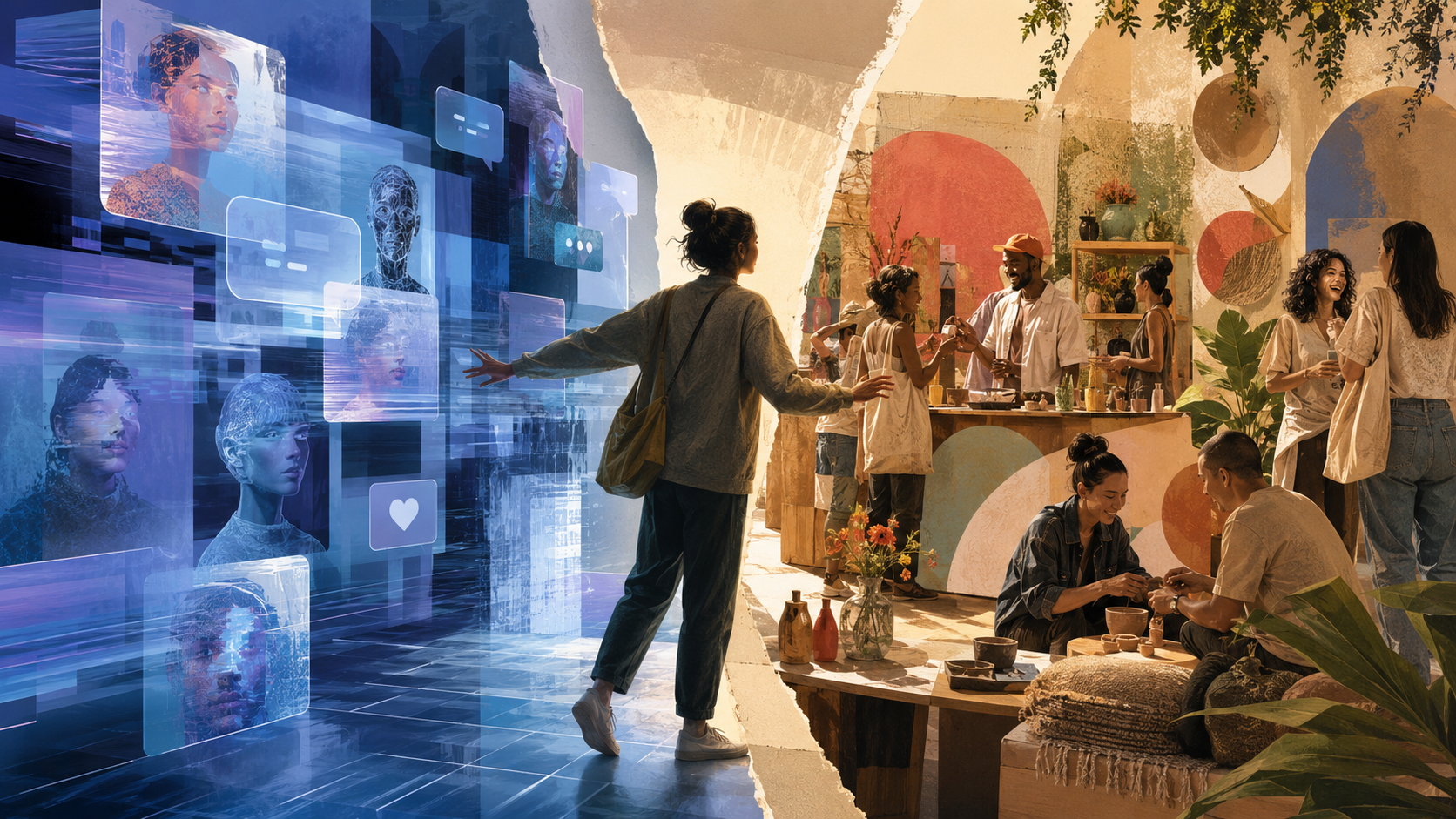
Here's where things get interesting. Rather than signaling the death of physical retail and in-person experiences, the AI era is actually elevating their importance. Liganova's research reveals that consumers increasingly use real-world touchpoints—stores, pop-ups, experiential activations—as verification tools. They discover products online, maybe ask an AI about them, then seek tangible proof before committing.
Andersen argues that brands need to stop treating experiential marketing like a one-off stunt. "Find the passion points in your brand, your product or your services and then build a world around it. One that is interesting, surprising and entertaining. A world your audience thoroughly enjoys," he advises. This isn't about hosting an event and calling it done. It's about creating an experiential ecosystem that bridges physical and digital consistently.
The "renaissance of real," as Liganova calls it, represents a fundamental shift. Physical experiences aren't competing with digital ones—they're reinforcing them. A consumer might discover your brand on TikTok, research it via ChatGPT, then visit your pop-up shop to confirm it's legit before finally purchasing. Each touchpoint validates the others in an interconnected trust-building journey.
Social Media Isn't Social Anymore (And That's Fine)
Lucy Hyman, client service director at Liganova's social-first subsidiary Mash!, identifies another crucial evolution: "Social media is no longer social, it's now interest-based media. Our approach to engaging with consumers has to be much more audience-first and interest-led."
The days of broadcasting carefully crafted campaign messages and expecting audiences to dutifully respond are over. Modern social platforms function more like interest graphs than social graphs. People gather around shared passions, communities, and values rather than just connecting with friends and family.
For brands, this means shifting from talking at audiences to participating with them. It requires genuine understanding of the communities they're trying to reach—not surface-level awareness, but deep knowledge of cultural signals, behaviors, and what actually matters to people. As Hyman puts it, "Nowadays you need to have a relationship, to actually be relevant, to be listened to, to have a bit of [consumers'] mental space."
The strongest brands aren't those with the biggest followings or the flashiest campaigns. They're the ones that authentically understand their communities and show up in ways that feel relevant rather than opportunistic. That might mean partnering with micro-creators who genuinely love your product, responding to audiences in real-time, or building long-term community management strategies rather than chasing viral moments.
The AI Paradox: Efficiency Meets Skepticism
Background research reveals just how tricky the AI landscape has become for brands. While 42% of consumers distrust AI visuals outright, according to studies from the Wharton School, brands are simultaneously drawn to AI tools for their efficiency and cost savings. The problem? Overreliance on AI risks making brands appear generic or untrustworthy—exactly what they're trying to avoid.
There's also the influencer question. Research shows that AI-generated influencers significantly reduce perceived authenticity and brand trust compared to human influencers. And here's the kicker: transparency about using AI doesn't help. Explicit disclosure actually makes consumer skepticism worse, suggesting that simply being honest about AI use isn't enough to overcome the trust gap.
This creates a fascinating challenge. AI is increasingly part of everyday purchase decisions—even for big-ticket items like cars. Consumers consult AI tools throughout their journey. But they remain deeply wary of synthetic content and experiences. Brands must navigate between leveraging AI's capabilities and maintaining the human touch that builds genuine trust.
What Marketers Should Actually Do Now
First, rethink discovery. If you're not on audiences' radar when they're asking ChatGPT for recommendations, you've already lost. Sanderson emphasizes understanding how AI-powered search and generative engines are changing marketing economics in real-time. Your SEO strategy needs to account for how AI tools surface information, not just traditional search engines.
Second, invest in deeper audience understanding. Hyman recommends shifting budgets toward richer research and community management. In a fragmented landscape where trust is harder to earn, brands need better insights into cultural relevance before they start creating. Messages need to mirror both brand voice and the lived reality of audiences—in real-time, across digital and physical worlds.
Third, build connected storylines, not isolated touchpoints. Andersen makes the case for experiences that extend beyond single events: "Create a brand world that people have fun with and in ... think about retail, experiential activations, pop-ups and digital content not as singular touchpoints, but one connected storyline that draws in the right people, brings them together and allows them to have fun with each other and the brand."
Creativity Still Matters (Maybe More Than Ever)
Perhaps the most important takeaway is that in a world where everyone can generate content and every claim can be questioned, creative storytelling becomes more important, not less. When AI can churn out technically competent content at scale, the human elements—surprise, entertainment, emotional connection—become the differentiators.
Andersen's challenge captures it perfectly: honesty is the price of entry, but creativity transforms truth into something memorable. Brands still need to surprise people. They still need to create moments that stick. They can't hide behind transparency as if it's enough to simply not lie.
The shift represents a return to marketing fundamentals wrapped in new technology. Understanding your audience deeply. Creating genuine value. Building real relationships. Showing up consistently across touchpoints. Making experiences worth people's time. These aren't new concepts—they're just harder to fake in the AI era.
As the marketing landscape continues evolving, brands face a choice: chase efficiency at the cost of authenticity, or invest in building genuine trust through memorable human experiences. The research suggests there's really only one sustainable path forward. Truth alone isn't enough. Brands have to prove it, experience it, and above all, make it worth people's time.
The renaissance of real isn't about rejecting AI or digital channels. It's about recognizing that in a world flooded with synthetic content, genuine human connection becomes the ultimate differentiator. Turns out the future of marketing might look a lot like its past—just with better tools and more discerning audiences demanding brands actually earn their trust rather than simply claiming it.
Sources
- TheDrum - The ‘renaissance of real’: the new rules of marketing in the AI era
- Salted Stone - Generative AI Design and Credibility: Navigating Brand Trust Challenges
- jmsr-online.com - Influence of AI-Generated Influencer Content on Brand Trust and Authenticity Perceptions
- northeastern.edu - AI influencer marketing may threaten brand trust
- TeamTecna - What is experiential marketing? Definition, strategies & examples
- LinkedIn - The Future of Social Media Marketing