Brands Can’t Afford to Ignore Creator Content
The days of families huddling around a glowing tube to watch a curated sitcom are officially over, replaced by a teenager in a bedroom explaining a skincare routine. It turns out that over one-quarter of the time spent on TV and video now belongs to creators, and traditional media is feeling the draft.

|
Posted: July 24, 2026 |
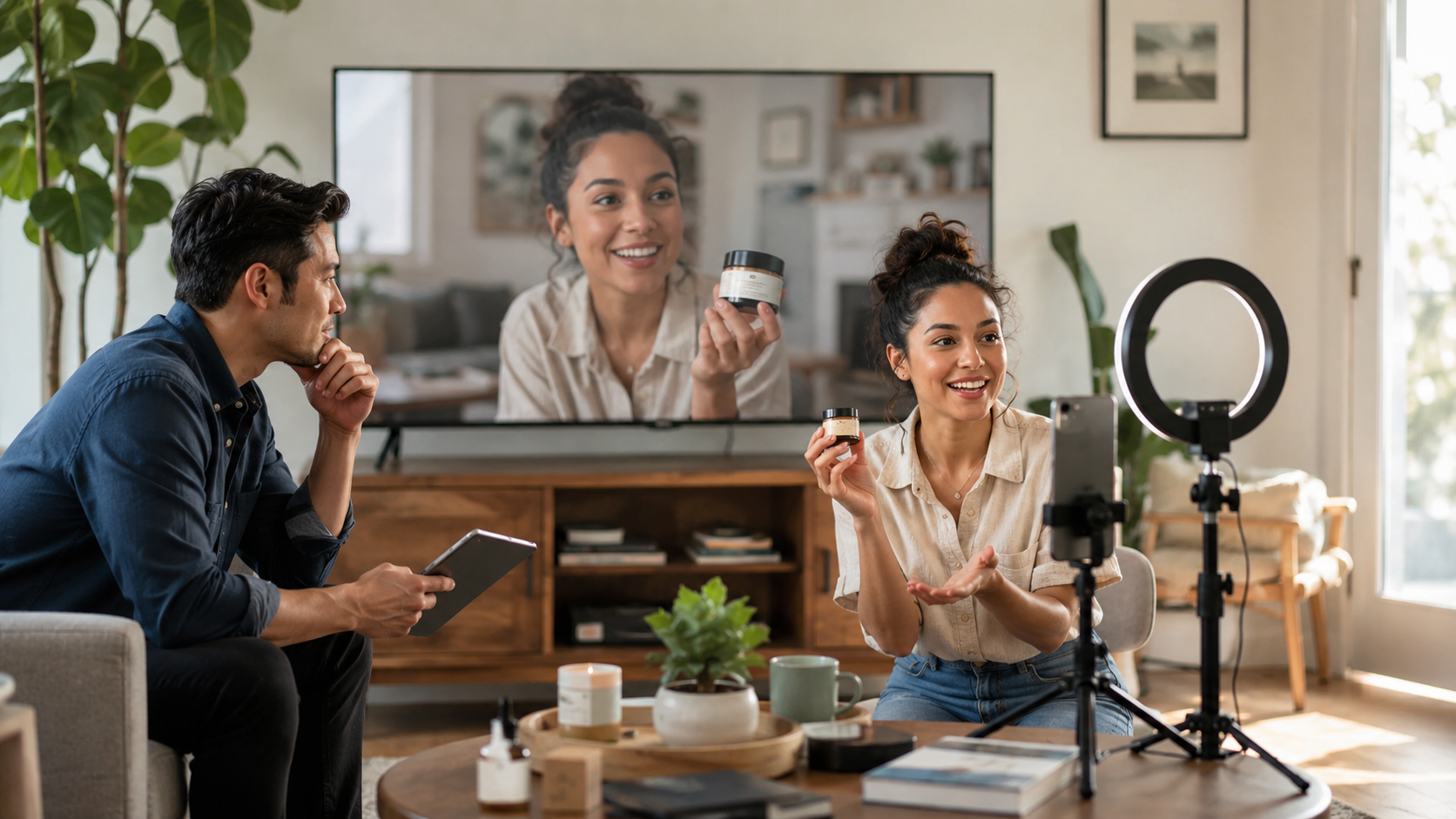
Recent data from Media Dynamics and EMARKETER paints a picture that should make every traditional media executive reach for the antacids. Creator video content now accounts for 26% of time spent with TV and video, which translates to roughly 1.7 hours every single day. While linear television (35%) and streaming (33%) still hold larger slices of the pie, the momentum is clearly swinging toward the individuals with ring lights and something to say. It’s no longer a peripheral hobby or a niche interest for the terminally online; creator content has matured into a distinct viewing category that demands its own seat at the adult table of media planning.
This isn't just a change in what people are watching; it's a fundamental shift in where they’re watching it. The "big screen" in the living room, once the exclusive domain of Hollywood budgets and network censors, is being colonized by YouTube and TikTok. Nearly half of the views for some major creator channels now come through connected TV (CTV) devices. Platforms like Amazon are leaning into this by launching things like the Creator Hub on Fire TV, essentially inviting the "unpolished" world of social media to sit on the couch right next to high-budget prestige dramas. For marketers, the message is clear: if they aren't where the eyeballs are, they're just shouting into an empty boardroom.
Production Value Is No Longer the Flex It Used to Be
There was a time when a brand’s legitimacy was measured by the glossiness of its 30-second spots. If a commercial didn't look like it cost a mid-sized nation’s GDP to produce, it wasn't taken seriously. Those days are dead. For Gen Z and the cohorts following them, relatability has officially dethroned production value. According to 2024 Deloitte data, most younger viewers find social media content more relatable than traditional TV or movies. They aren't looking for a filtered version of perfection; they're looking for someone who looks like them, talks like them, and might actually use the product in real life.
The $44 Billion Question
If money talks, it’s currently screaming about creators. Advertiser spending on the genre reached $37 billion in 2025, and it’s expected to climb to $44 billion this year. This isn't just experimental budget leftovers anymore. Nearly half of marketers now view creator partnerships as an essential investment, making it a core part of their media planning rather than a speculative bet.
Relinquishing the Steering Wheel
For many brands, the hardest part of this shift isn't the budget—it’s the control. For decades, brand managers have been the high priests of their own image, meticulously controlling every syllable and pixel. Creator marketing requires them to hand over the keys to someone else. It's a risk, certainly. A creator might use a word that isn't in the brand guidelines, or they might film in a messy kitchen that hasn't been color-graded by a professional.
But that risk is exactly why it works. The very thing that makes a brand manager nervous—the lack of total control—is what makes the audience trust the content. When a brand tries to force a creator to follow a rigid script, the audience smells the corporate interference immediately, and the engagement tanks. The brands that are winning are the ones that choose creators whose values already align with theirs and then let those creators do what they do best: talk to their audience like human beings. It’s a terrifying prospect for the “command and control” school of marketing, but the alternative is spending millions on content that people actively try to skip.
The Inevitability of the Shift
As the creator economy matures, the volume of marketers entering the space will only increase, which means the noise level will rise. To stand out, brands can't just throw money at whoever has the most followers. They have to build ongoing partnerships that feel original. They have to move beyond the "one-off post" and toward sustained collaborations that remain relevant to what the audience actually cares about.
This is a behavioral shift, not a format trend. It’s not just about "short-form video" or "TikTok trends." It’s about a fundamental change in how humans consume information and who they choose to trust. Traditional advertising worked on a model of interruption—breaking into someone’s day to demand attention. Creator marketing works on a model of invitation—joining a conversation that the viewer has already chosen to be a part of.
Sources
- Creator Television - Creator Television | The First Creator-Led Streaming Network
- Digiday - Long-form creators eye taking over TVs
- CNBC - Creator content made the main stage at TV's 'upfront' pitches
- Hootsuite - Social Media Trends 2026
- CreatorIQ - Influencer Marketing Trends 2026
- Coherent Market Insights - Global Creator Economy Market Size and Forecast, 2026- ...
- Tribe Group - The Top Creator Marketing Stats you Need to Know
- Circle Blog - Creator Economy Statistics for 2026 | Circle Blog
- Archive - 25 User-Generated Content (UGC) Engagement Statistics