Spain's World Cup Win Sparked a Real-Time Marketing Scramble
How McDonald's, LEGO, KFC and other brands raced to turn Spain's second World Cup title into their own moment after the final whistle.

|
Posted: July 22, 2026 |
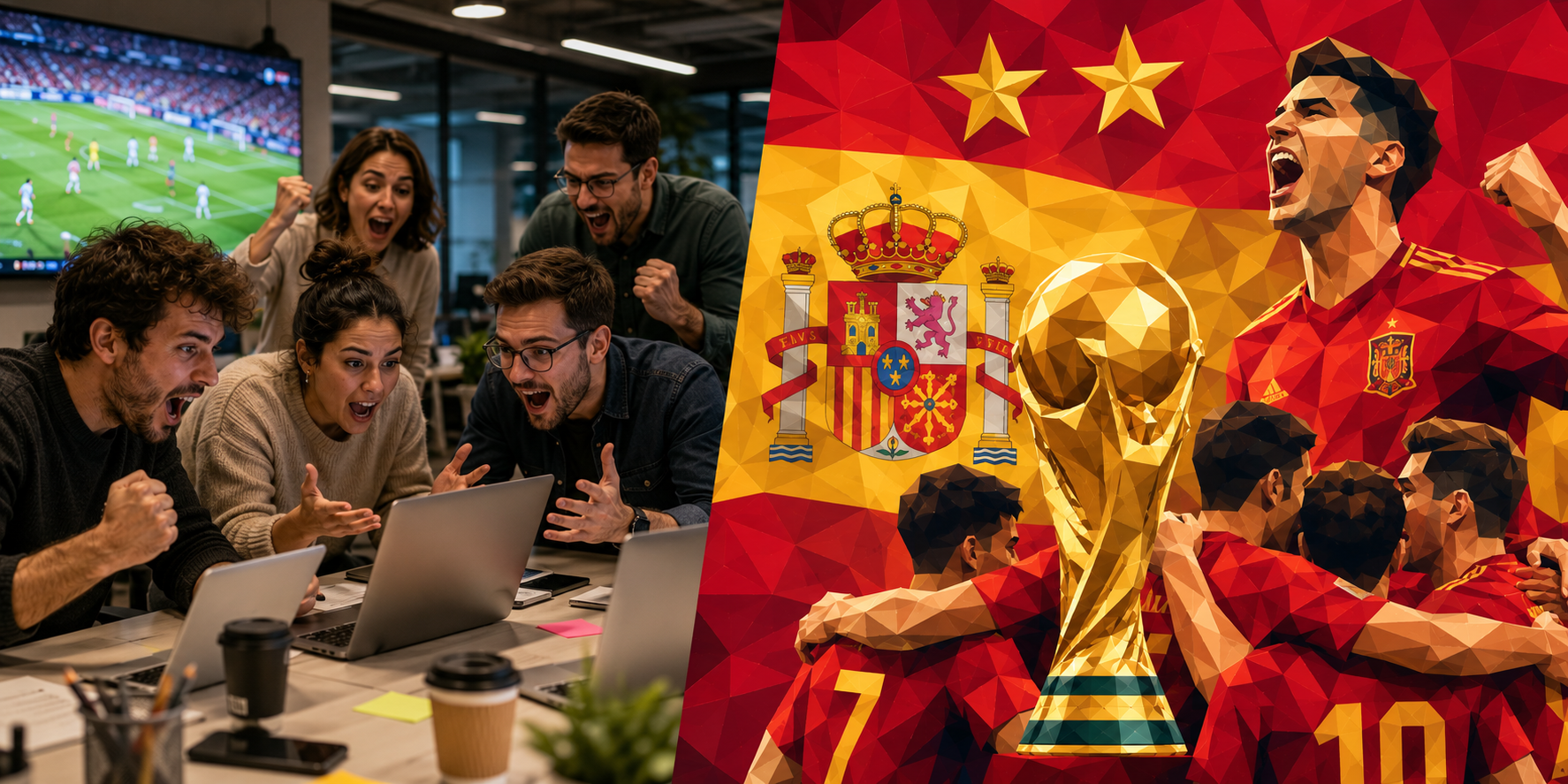
The final whistle in the FIFA World Cup 2026 didn't just signal a victory for Spain on the pitch; it triggered a synchronized eruption of digital creativity across the corporate world. As the Spanish squad clinched their historic second title by defeating Argentina, social media managers and creative directors were already hitting 'publish' on campaigns that had likely been sitting in draft folders for weeks.
Spain's victory over Argentina served as the ultimate canvas for 'moment marketing.' In an era where consumer attention spans are shorter than a referee’s VAR review, the ability to jump into a global conversation within seconds is the difference between cultural relevance and total invisibility. Major brands didn't just join the celebration; they high-jacked it in the best way possible, showing that when the world is watching a single event, the cleverest voice in the room often wins the biggest share of mind.
The Psychology of the 'Second Serving'
McDonald's Spain provided one of the most elegant examples of how to link a global product to a national milestone without sounding like a corporate robot. Their creative, which featured the tagline "Our second serving tastes better than ever," was a direct nod to Spain's second World Cup star. It's the kind of wordplay that works because it's grounded in the brand's core identity—food—while celebrating the collective euphoria of a nation.
This wasn't just a congratulatory post; it was a strategic alignment. By framing the World Cup victory as a "second serving," McDonald's tapped into the sensory experience of their customers. It wasn't about the mechanics of football; it was about the feeling of satisfaction. This approach avoids the stiff, formal tone that often plagues corporate sponsorships, opting instead for a playful connection that resonates with fans who are likely celebrating with a late-night burger anyway. It's a reminder that RTM doesn't need to be complex to be brilliant; it just needs to be fast and relevant.
Minimalism and the LEGO Effect
LEGO’s contribution to the celebration was a lesson in the power of the icon. Their creative featured a simple LEGO football player proudly standing before the Spanish flag, now adorned with two stars. In the chaotic, noisy world of social media, LEGO’s minimalist execution stood out by not trying too hard. The two stars—the universal symbol of World Cup titles—spoke volumes without needing a paragraph of copy.
Research into the 2026 World Cup marketing landscape shows that non-sponsors like LEGO often lead in engagement because they aren't bogged down by the restrictive 'clean zone' rules that govern official partners. They have the freedom to be more agile, more creative, and more 'human.' The LEGO post didn't feel like an advertisement; it felt like a fan’s tribute. That distinction is vital. When a brand acts like a fan, the fans embrace the brand. It builds an affinity that $12 million group-stage ad packages sometimes fail to reach.
KFC and the Banter Economy
KFC Spain has long been a practitioner of 'shitposting'—a term for a specific style of surreal, low-effort-looking but high-impact social media humor. Their response to the win was no different. Leaning into the "banter" culture that dominates football Twitter, KFC used the victory to engage in the larger cultural conversation. By using humor rather than a polished corporate message, they bypassed the skepticism that young audiences usually have toward brand advertisements.
In the world of RTM, being funny is often more valuable than being 'on brand.' KFC understands that a meme shared by thousands is worth more than a press release read by none. Their ability to serve up football-inspired banter alongside their fried chicken makes them part of the community. They aren't just selling buckets; they're sharing the joke. This kind of real-time engagement turns a brand from a faceless entity into a personality that consumers actually want to follow.
The Economics of the 2026 Marketing Surge
To understand why these brands are fighting so hard for a few seconds of attention, one has to look at the staggering economics of the 2026 World Cup. Marketing firm WARC estimated that the tournament drove more than $10 billion in advertising spend. This wasn't just a localized spike; it was a global commercial phenomenon. In countries like Mexico and the U.S., programmatic advertising prices—CPMs—surged by three to four times their usual levels during the knockout stages.
With streaming CPMs running between $60 and $120, the cost of being seen was astronomical. This financial pressure is exactly why RTM is so vital. If a brand can't afford a $15 million sponsorship package on Telemundo or Fox, they have to win through creativity on social media. The 2026 tournament also introduced the controversial 'hydration breaks'—two-minute pauses in each half that allowed broadcasters to sell even more inventory. While stadium fans booed these breaks as a sign of excessive commercialization, marketers saw them as a goldmine for second-screen traffic. As fans looked at their phones during the break, brands like McDonald's and LEGO were ready and waiting.
National Pride: SEAT and Iberia’s Homegrown Advantage
For Spanish brands like SEAT and Iberia, the victory wasn't just a marketing opportunity; it was a moment of national identity. Their congratulatory creatives focused on the sense of collective pride. As an airline and an automobile manufacturer, these brands are literally the engines of the country. By aligning themselves with the national team’s triumph, they reinforced their position as pillars of Spanish society.
This type of RTM is less about humor and more about shared values. When Iberia celebrates a win, it’s reminding the public that it’s the brand that carries the champions home. When SEAT joins the party, it’s celebrating the engineering and spirit of the nation. It’s an awareness play that builds long-term affinity. As marketing executives pointed out during the tournament, World Cup investment is often a top-of-funnel move. It might not turn into an immediate car sale or a flight booking the next morning, but it makes people "feel good" about the brand. In the long run, that affinity is what drives market share.
The Shift to the Second Screen
During the 2026 final, the synergy between the television broadcast and the smartphone was absolute. Data showed an immediate increase in second-screen traffic during hydration breaks and half-time. Fans weren't just watching the game; they were checking stats, looking at replays, and, most importantly, scrolling through the reactions of their favorite brands and influencers.
This shift has changed the rules of the game. It’s no longer enough to have a great TV spot. A brand needs to have a digital presence that responds in seconds to what’s happening on the field. If a player like Lamine Yamal scores a wonder goal, a brand has about three minutes to produce a relevant piece of content before the conversation moves on. The brands that succeeded in the 2026 final were the ones that treated their social media rooms like newsrooms—fast, reactive, and always on.
Why Real-Time Marketing Won the World Cup
The 2026 World Cup proved that while official sponsorships provide massive reach, RTM provides massive resonance. The $10 billion spent on ads during the tournament bought visibility, but the clever, real-time posts from the likes of McDonald's Video and LEGO bought something much more valuable: cultural currency.
You don't need the biggest budget to win the World Cup; you just need the quickest wit and the best timing. The tournament showed that the most impactful moments don't always happen during the 90 minutes of play—sometimes, they happen in the seconds immediately following the final whistle, when a brand manages to say exactly what every fan is feeling. Spain may have the trophy, but the brands that capitalized on the win have the lasting attention of a global audience. It's a win-win, provided you're fast enough to keep up.
Sources
- forbes.com - How Olipop, Levi's And Taco Bell Are Reshaping World ...
- adweek.com - FIFA World Cup 26 Ad Tracker: Brands Kick Off Summer of ...
- portada-online.com - FIFA 2026 World Cup Advertising So Far 9 Critical Insights
- instagram.com - Here's how brands are celebrating Spain's FIFA World Cup ...
- facebook.com - Here's how brands celebrated Spain's FIFA World Cup win! ...
- smartly.io - World Cup Marketing Lessons: How Brands Won Real ...
- contentgrip.com - Spain's World Cup win sparks rapid brand trendjacking
- thegutenberg.com - World Cup 2026 Marketing Playbook: How Smart Brands Win ...
- marketingdive.com - Owning the moment: How brands can win the 2026 World ...
- threads.com - Here's how brands are celebrating Spain's FIFA World Cup ...