Nestle's KitKat Heist Campaign Shows Even Old Dogs Can Learn New Tricks
KitKat Heist Campaign Turns Theft Into Reactive Marketing Gold

|
Posted: July 20, 2026 |
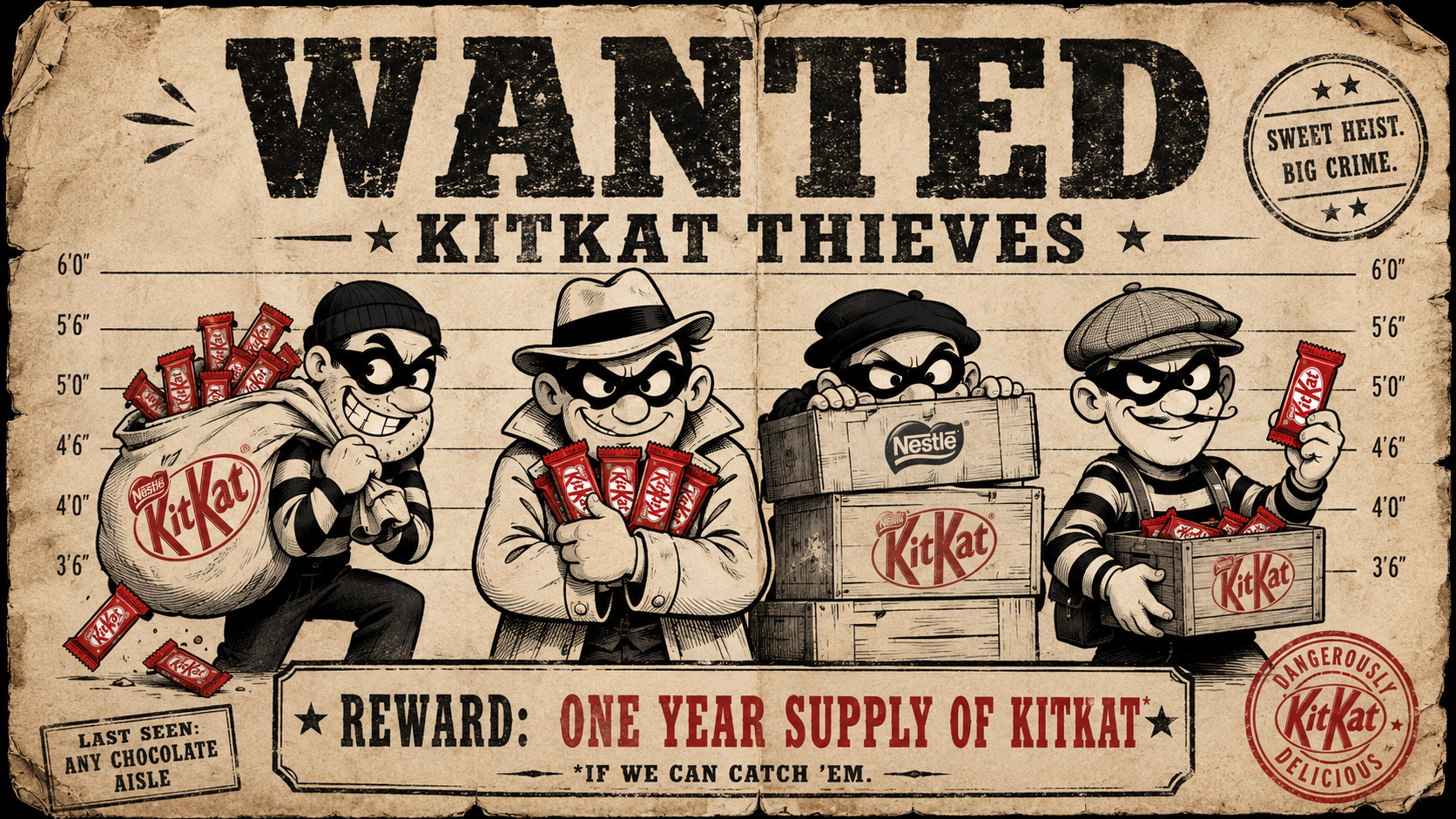
When 12 tons of KitKat bars vanished from a truck somewhere between Italy and Poland, most corporate comms teams would have reached for the crisis management playbook. Nestlé's marketing department grabbed the popcorn instead.
What could have been a dreary press release about supply chain disruption turned into one of 2026's most talked-about marketing moments. It generated the equivalent of $224 million in free advertising and proved that even a 150-year-old food giant can move like a scrappy startup when the moment demands it.
When Life Gives You Lemons (Or Thieves Give You Headlines)
It is late March, days before Easter and peak chocolate season, and Mélanie Brinbaum, Nestlé's European head of marketing, gets word that over 400,000 KitKat bars have gone missing. For a few hours, it was office comedy gold. Someone probably made a joke about the thieves really needing a break. Then something clicked.
"A colleague on my team half in jest, wondered aloud whether the story should be made public," Brinbaum tells Fortune. That half-joking comment sparked what would become a masterclass in reactive marketing. It is the kind of execution that makes brand managers everywhere simultaneously jealous and inspired.
The team had 24 hours to turn the joke into a campaign. Why the rush? Because the internet doesn't wait for quarterly planning cycles or three-week approval processes. The story was already spreading, and Nestlé could either control the narrative or watch it happen without them.
The Art of Making Yourself the Punchline
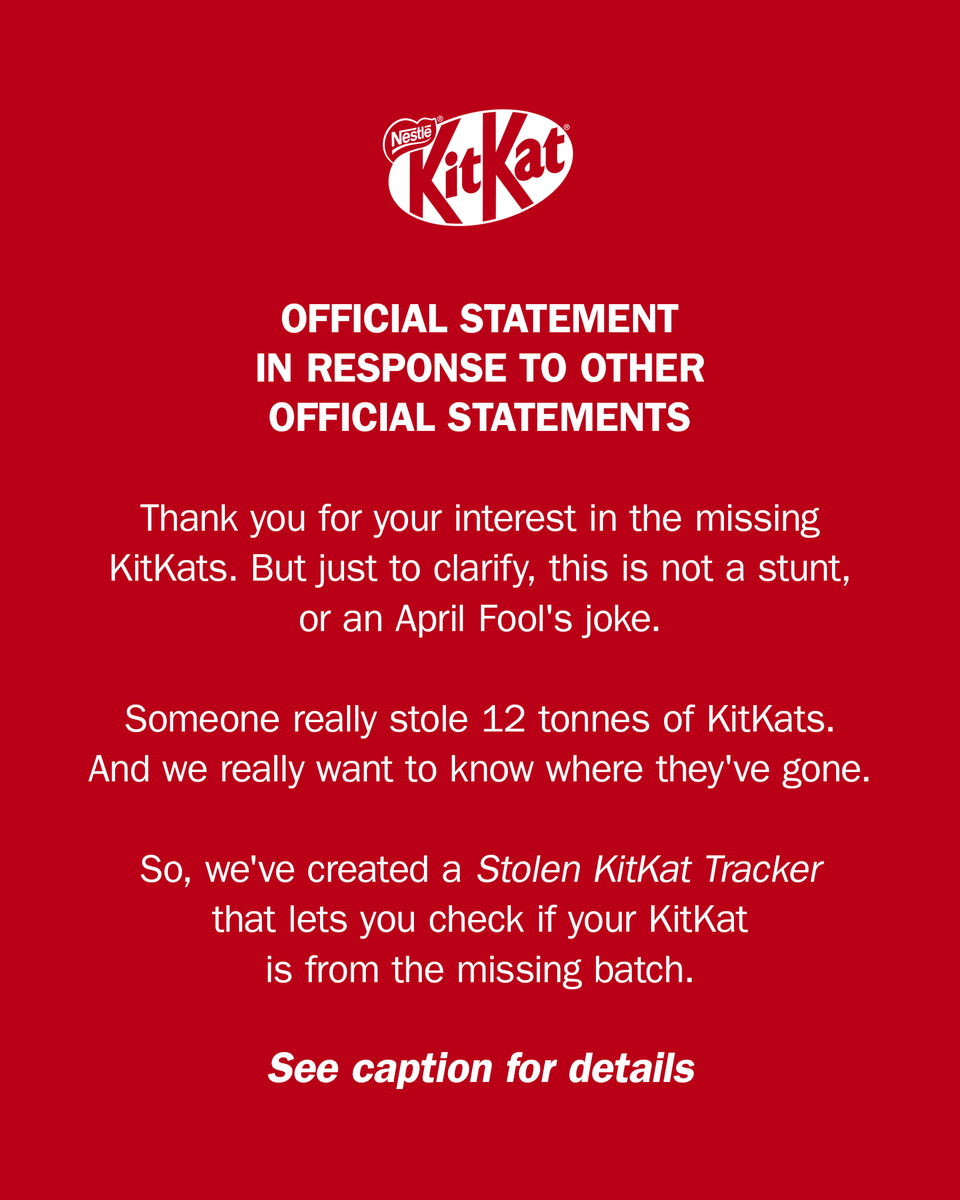
Here is where Nestlé did something genuinely refreshing: they leaned into the absurdity. Their statement about the incident included "We've always encouraged people to have a break with KitKat. But it seems thieves have taken the message too literally and made a break with more than 12 tons of our chocolate."
It is the kind of dad joke that would make most corporate legal departments break out in hives. But it worked. The post racked up 393,000 likes overnight, which is the highest in the account's history. Turns out people quite like it when brands act like humans instead of soulless entities optimized for quarterly earnings.
The campaign didn't stop at a cheeky tweet. Nestlé and its agency partner VML created a "stolen KitKat tracker." This web tool let people check if their KitKat was part of the missing shipment by entering the eight-digit batch code on the wrapper. Over 2.2 million people engaged with it. Daily social video views jumped from about 1 million to 29 million. The tool even flagged three suspicious batch codes and surfaced one lead that became part of an active police investigation.
For the grand finale, they staged a mock security convoy escorting a KitKat-branded truck through Toronto, complete with secret service-style theatrics. Other brands like Domino's, KFC, and Ryanair piled onto the joke, creating the kind of organic social momentum that money genuinely can't buy.
Why This Matters (Beyond The Memes)
The KitKat heist campaign is funny, sure. But it is also a window into how legacy brands need to operate in 2026 if they want to remain culturally relevant. Nestlé isn't some nimble direct-to-consumer startup. It is a multinational behemoth with 2,000+ brands, 186 countries of operation, and 150 years of institutional inertia to overcome.
Yet somehow, they moved faster than most tech companies.
Brinbaum's approach offers a blueprint that other legacy marketers would do well to study. She has built what she calls "commando teams." These are small groups assembled outside Nestlé's usual organizational structure and given authority to move concepts from idea to execution in days rather than months. The traditional creative brief, with its layers of sign-off and process worship, has been replaced by quick pitches tested for enthusiasm on both sides.
"Most don't," Brinbaum admits when asked how often unconventional ideas turn into global campaigns. "Trying to force virality tends to backfire." The real skill, she argues, isn't manufacturing viral moments. It is building a marketing team fast and confident enough to catch lightning when it strikes.
The 'Sleeping Beauty' Problem
Nestlé's success with the KitKat campaign takes on additional significance when you consider the company's broader brand portfolio challenges. With so many brands under one roof, there is a risk some become what Brinbaum calls "sleeping beauties." These are brands that are famous and profitable, but disconnected from the broader cultural conversation.
This risk isn't theoretical. Nestlé cut the number of brands receiving media support from more than 400 in early 2024 to 150 in 2026. That means many of its 2,000-plus brands now compete for cultural relevance with no dedicated media budget behind them. When you are big and well-distributed, it is tempting to coast on legacy recognition. But consumer expectations have been raised by nimble challenger brands that move quickly and speak internet.
"When you're a big brand with a long history, it's easy to come up with mediocre innovations," Brinbaum says. The KitKat campaign is her team's answer to mediocrity. It is a middle finger to the instinct to play it safe simply because the brand is already successful.
The Serious Side Of A Silly Campaign
Beneath the jokes and the memes, there is a genuine issue at play. Cargo hijackings aren't just inconvenient. They are a growing problem for companies and their supply chain partners. Europe recorded 30,543 cargo crime incidents between 2024 and 2025, with documented losses reaching €860.5 million ($991.5 million).
Brinbaum says part of the reason for going public with the theft was to draw attention to this escalating issue. "This is not the first time" Nestlé has faced an incident like this, she adds. By making noise about the heist, Nestlé drew attention to a supply chain vulnerability that affects the entire industry while also generating massive brand awareness. It is the rare corporate play that manages to be both self-serving and genuinely useful.
What Other Brands Can Learn
The KitKat heist offers several lessons for marketers stuck in slow-moving organizations:
Speed Beats Perfection
Nestlé gave its agency 24 hours to return with a concept. That isn't because they love arbitrary deadlines. It is because the moment was perishable. By the time a traditional approval process spits out a campaign, the joke has already been made by someone else.
Make Yourself The Punchline
Legacy brands embracing the fact that they can be made the butt of a joke is genuinely refreshing. Nestlé didn't try to spin the theft into a somber statement about supply chain resilience. They acknowledged the absurdity and invited everyone to laugh with them.
Build The Team Before You Need It
The KitKat campaign only worked because Nestlé had already built the organizational infrastructure to move quickly. The "commando teams," the streamlined approval process, and the agency relationships were all in place before the truck went missing. You can't manufacture that culture overnight.
Not Everything Needs A Strategy Deck
Brinbaum's team replaced lengthy creative briefs with quick pitches tested for enthusiasm. This isn't about abandoning rigor. It is about recognizing that some
It's easy to say "be bold" in a presentation. It's much harder to create the organizational conditions where bold ideas can survive first contact with legal, finance, and executive leadership. Nestle's marketing team has apparently done the hard work of building those conditions, which is why a truck theft could become a cultural moment instead of a footnote in a quarterly report.
When Legacy Meets Agility
The most interesting thing about the KitKat heist campaign isn't that it worked. It is that it happened at all. It proves that the old divide between "startup mentality" and "corporate discipline" is increasingly false. The best organizations will figure out how to combine both: the resources and distribution of a legacy brand with the speed and irreverence of a startup.
For other legacy brands watching from the sidelines, the message is clear. Playing it safe isn't safe anymore. Consumers expect brands to participate in culture, not just broadcast at it. When the universe hands you a perfectly absurd marketing opportunity (12 tons of stolen chocolate bars, for instance), you had better be organized enough to seize it before someone else makes the joke first.
Sources
- fortune.com - How Nestlé turned a chocolate heist into a masterclass in brand building
- famouscampaigns.com - Internet pile-on turns KitKat theft into a marketing win for Nestlé
- creative.salon - Nestlé and VML's Engagement Masterstroke Following The Audacious KitKat Heist
- bmoutdoor.com - KitKat Turns Chocolate Theft Into Marketing Spectacle
- digitalagencynetwork.com - Nestle Marketing Strategy: How the Brand Mastered Global Campaigns
- statsocial.com - Nestlé Uncovers Up to 25% Sales Lift with Social & Influencer Marketing Attribution