
Fast-Food Brands Turned PlayStation's Disc Backlash Into a Reactive Marketing Moment
Why speed, simplicity, and tapping into consumer emotion made "digital pizza" the perfect response to the death of the PlayStation disc.

|
Posted: July 6, 2026 | Updated: July 7, 2026 |
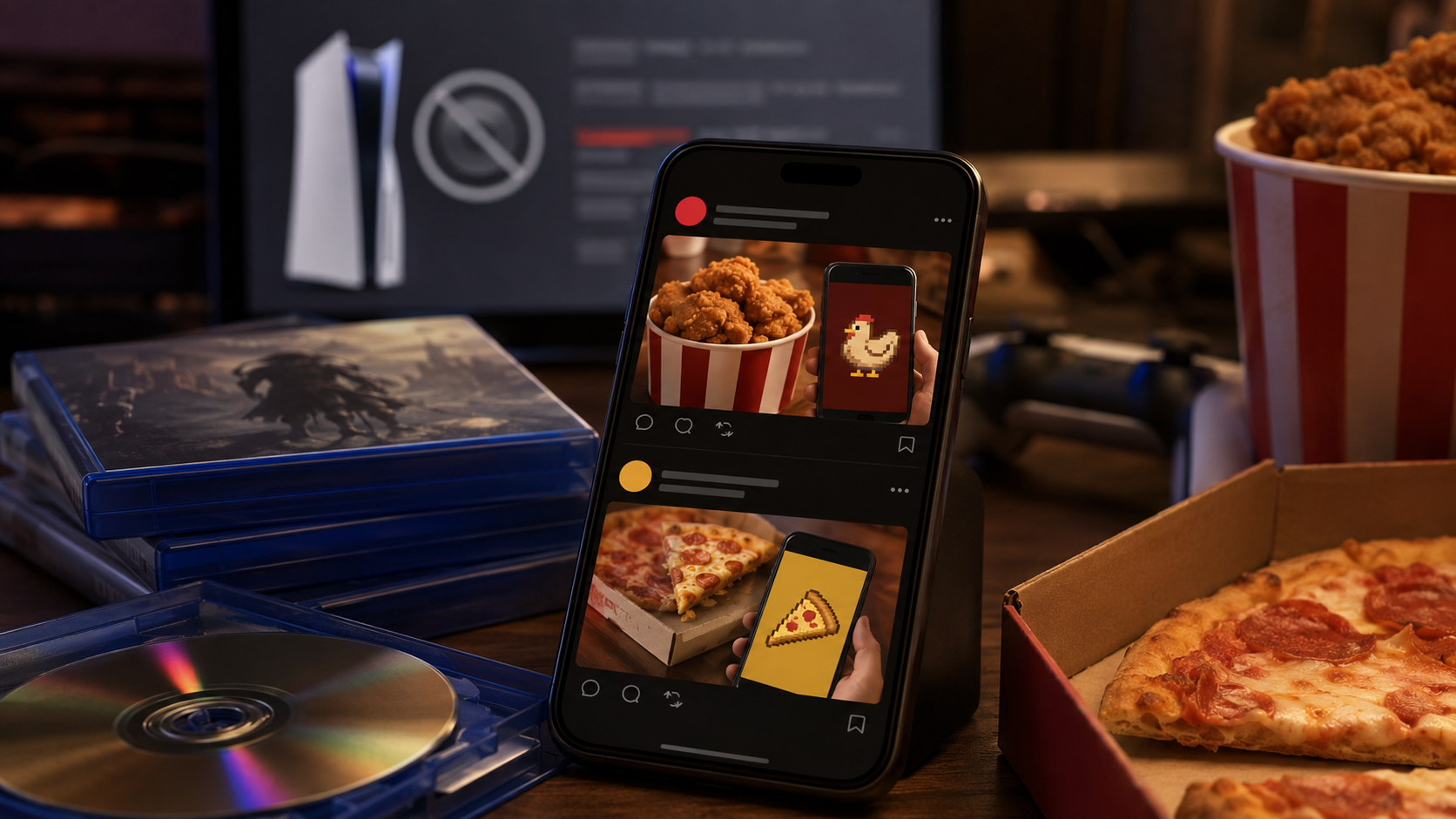
Sony probably expected some pushback when it confirmed that new PlayStation games will stop getting physical disc releases in January 2028. What it got instead was the full internet treatment: gamer frustration, nostalgia, ownership anxiety, jokes, dunking, and then brands jumping in from completely different
KFC Spain and Domino's UK had nothing to do with PlayStation discs. They don't sell consoles, games, controllers, subscriptions, or digital storefront access. But they understood the emotional shape of the conversation faster than many brands understand conversations in their own category.
The reaction wasn't really about discs in the narrow technical sense. It was about people feeling like another piece of ownership was being moved out of their hands. Physical games can be collected, resold, borrowed, lent to a sibling, pulled off a shelf years later, or bought second-hand when a new copy is too expensive. Digital games are cleaner and more convenient, but they also make people more dependent on the platform that sold them the license.
The Death of the Disc and the Birth of a Meme
The jokes worked because they made Sony's decision feel ridiculous in a way people could understand instantly. KFC Spain played with the idea of "digital" chicken and downloadable food. Domino's UK leaned into the same logic with the idea of digital pizza. The comparison is dumb in the right way. Nobody needs a detailed explanation of why a PNG of chicken or a downloadable pizza is useless. That's the whole joke.
Good reactive marketing often works through comparison, not commentary. The brand doesn't need to publish a mini essay on platform economics, digital licensing, consumer rights, or the decline of physical media. It just has to find the right adjacent image.
Why Speed Trumps Polish in the Digital Age
This kind of post has a short shelf life. Not a "maybe next week" shelf life. Sometimes reacting quickly can be to your detriment, but other times you need to move at the speed the internet does. This controversy and the flashpoint it caused isn’t going to stay in the forefront for a long time. For better or worse this topic will affect die-hard PlayStation fans but the rest of the internet will move away from it quickly. In order to be effective, Dominos and KFC needed to act fast.
That matters because the posts didn't need much production. They didn't need a full campaign, a polished video, or a strategy deck. The creative idea was simple: take Sony's logic and apply it to chicken or pizza. The roughness was part of the appeal. It felt like a social team saw the same conversation everyone else saw and had a good line ready before the moment cooled off.
That's where a lot of brands miss. They see the trend, route it through too many approvals, sand off the joke, and publish once the audience has already moved on. By then, the post doesn't feel reactive. It feels like a brand wearing yesterday's meme as a costume. KFC and Domino's avoided that because the reaction was close to the original feeling. People were annoyed. The brands acted annoyed in a funny, category-specific way. That's enough.
Ownership of Assets is Becoming a Flashpoint in the Digital Era
The deeper reason the jokes landed is that digital ownership is already a sore spot.
Gamers aren't new to digital downloads. Plenty of people prefer them. No disc swapping, no cases, no scratched media, no waiting for a store to ship anything. Sony's argument is built on that behavior shift, and the market has clearly been moving in that direction for years. But convenience doesn't erase the unease.
A physical game still gives people a sense of control, even if the legal reality is more complicated than "I own this forever." A disc can sit on a shelf. A used copy can circulate. A collector can preserve it. A parent can buy one game and let multiple kids pass it around. There are real consumer behaviors tied to physical media that don't transfer cleanly to a digital storefront.
Digital libraries feel different because access is mediated by accounts, licenses, stores, servers, regional rights, and platform policies. Most of the time, that system works fine. The problem is that consumers know it can change. They have seen movies, shows, music, and games vanish from platforms. They have watched digital purchases become less permanent than the word "purchase" implies.
So when Sony talks about consumer preference and digital formats, some players hear something else: less control, fewer resale options, weaker preservation, and more dependence on the platform. That is the emotional gap the fast-food jokes just used.
Watch the Frustration, Not Just the Trend
The useful signal here wasn't "PlayStation is trending." That's too broad. Lots of things trend for reasons that are useless to a brand. The better signal was more specific: people feel like a familiar form of ownership is being taken away, and they're expressing that frustration through jokes. That's the opening.
Reactive marketing works better when it starts with the emotion underneath the topic. Is the audience annoyed? Relieved? Confused? Nostalgic? Suspicious? Embarrassed? Feeling ripped off? Feeling seen? The content idea usually comes from that layer, not from the headline itself.
KFC and Domino's didn't react to "Sony changes distribution policy." They reacted to "digital-only everything is starting to feel absurd." That's a much better brief.
There's also a writing lesson in this. The strongest posts in these moments are usually shorter than marketers want them to be. A brand doesn't need to recap the Sony announcement, define physical media, explain the market shift, and then deliver the joke. People seeing the post are already inside the conversation. The job is to add a sharp angle, not rebuild the whole context from scratch.
That applies beyond memes. If a community already knows why something matters, overexplaining can make the brand sound late or insecure. A quick, specific reaction often feels more confident than a fully packaged take. The risk, of course, is that short reactive content can be misread or feel glib. That's why the target matters. Punching at a corporate decision that consumers are already frustrated by is safer than making light of something personal, tragic, or genuinely harmful. The joke worked because the target was a platform shift, not the audience itself.
This wasn't a revolutionary brand moment. It was two fast-food accounts making timely jokes about a gaming controversy. But that's exactly why it's memorable.
Sources
- theguardian.com - Sony will kill PlayStation games on discs in 2028 and offer ...
- arstechnica.com - Sony announces end of PlayStation discs, parts of digital ...
- facebook.com - On July 1, Sony announced that no new PlayStation games ...
- facebook.com - LOL: KFC & Pizza Hut Are Trolling Sony Over Their Decision to End ...
- msn.com - Domino's mocks Sony's digital-only PlayStation shift with viral post
- gosugamers.net - Domino's and KFC among brands roasting PlayStation over its plans ...
- 80.lv - Brands Share Playful Responses to Sony's Digital-Only ... - 80 Level
- news.designrush.com - KFC, Domino's Hijack PlayStation's Disc Exit With Memes
- creativebloq.com - From Nintendo to KFC, how brands reacted to the PlayStation disc ...
- businessinsider.com - Sony's Digital Shift for PlayStation Spurs Online Backlash, Jokes