Starbucks Bets on Employee-Generated Content to Reach Gen Z
Generic AI tools help you write faster, but ContentEngine helps you start smarter. See how real-time context, research, and source-backed perspective change the content workflow.

|
Posted: July 3, 2026 |
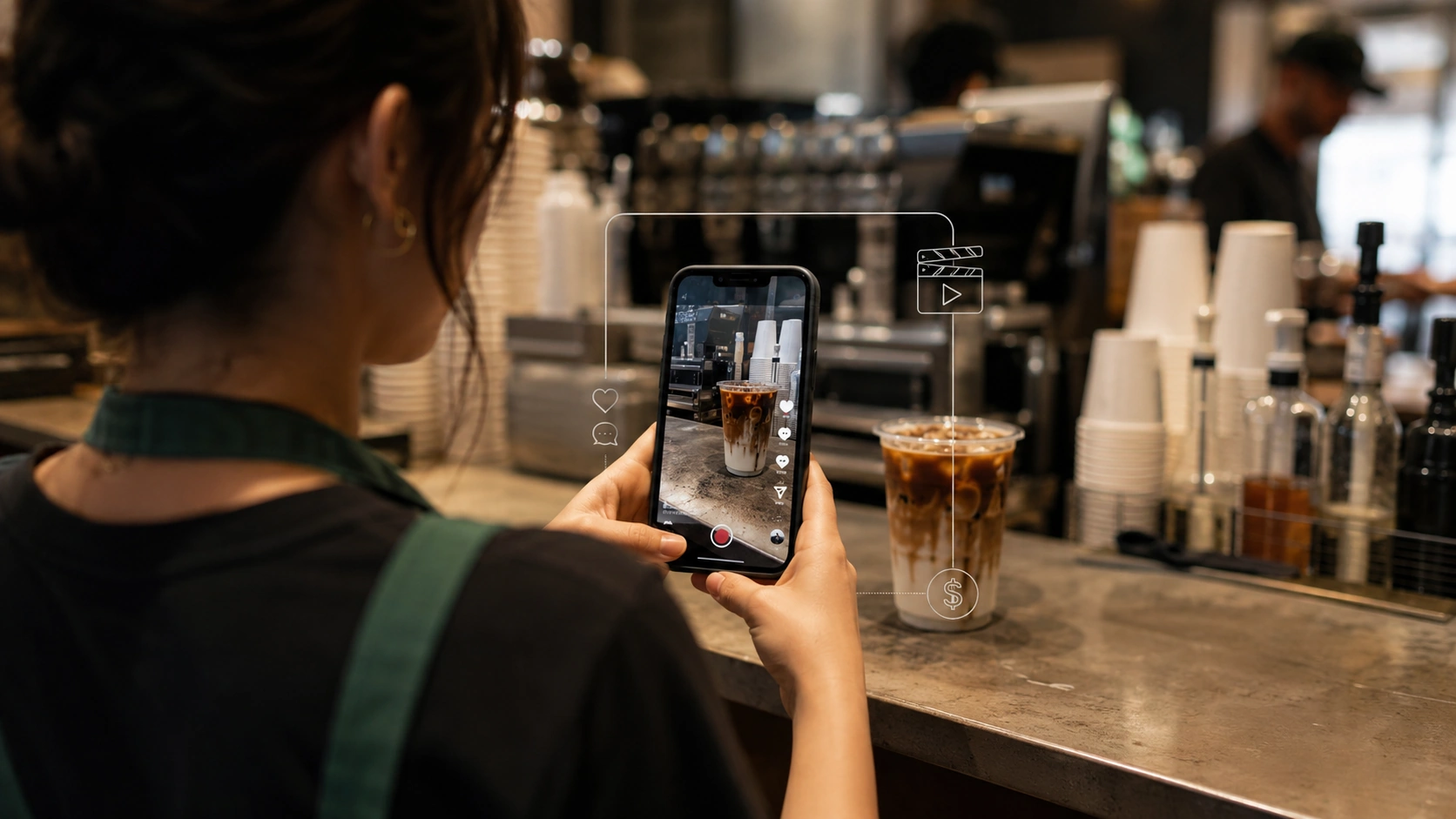
Starbucks is taking a more formal swing at something its employees were already doing: making the brand part of TikTok culture. The company is piloting a custom Creator Network inside TikTok's Content Suite, built around employee-generated content. The program expands on Starbucks' Green Apron Creators initiative, which started in 2024, and gives select employees a way to receive content briefs and share in ad revenue from their posts.
That last part matters because this isn't just Starbucks reposting a funny barista video and calling it community engagement. The company is trying to turn employee content into a more structured media channel, with briefs, compensation, creator workflows, and paid social potential. It's a smart move, but it's also a delicate one.
Why Starbucks Wants Employees in the Drivers Seat
Employee-generated content works because it doesn't usually look like an ad. A barista making a drink, reacting to a new menu item, or showing a behind-the-scenes moment can feel more believable than a polished brand campaign. For Gen Z especially, that kind of content often sits closer to product discovery than traditional advertising does.
That explains why Starbucks is leaning in. According to reporting on the pilot, Sprout Social data found that 61% of Gen Z regularly learns about new products from employee-generated content. Starbucks also says its employees already post at three times the rate of employees at similar-sized chains. In other words, the behavior is already there. Starbucks is trying to put a system around it.
That system could give the brand a steady stream of lower-friction content for TikTok, while giving employees a clearer path to get paid for the content they create. It also gives Starbucks more visibility into what gets briefed, what gets promoted, and what can be reused in paid media.
The Authenticity Problem
The obvious risk is that employee content stops feeling like employee content once it starts moving through brand briefs. That doesn't mean the program is a bad idea. It just means the execution matters more than the announcement. The appeal of employee-generated content is that it feels closer to real workplace culture than brand messaging.
Starbucks has to leave room for personality, timing, employee judgment, and some amount of messiness. The more the content feels over-managed, the less useful it becomes. A barista's video works because it feels like something a person wanted to make, not because it perfectly lands three approved message points.
This is the tension at the center of employee-generated content. Brands want the trust that comes from real employees, but they also want control, consistency, and usable assets. Those goals don't always sit comfortably together.
A Better Model Than Influencers
For marketers, the interesting part isn't just that Starbucks is using TikTok. It's that the company is treating employees as an ongoing creator network rather than a one-off campaign asset. Traditional influencer marketing often starts with finding outside creators, negotiating deliverables, and hoping the audience fit is close enough. Starbucks is testing a different model: identify people already connected to the brand, give them creative direction, compensate them, and build a repeatable content pipeline around their work.
That could be especially useful for a brand like Starbucks, where the in-store experience is a big part of the product. Drinks, routines, customer habits, seasonal launches, customization, and store culture all lend themselves to quick social content. Employees are closer to those moments than an external creator ever will be.
But the structure has to be fair. If employees are helping create marketing value, compensation and rights need to be clear from the start. That includes how content can be reused, whether posts can be turned into ads, what happens if a video performs unusually well, and how much creative freedom employees actually have. Those details are not side issues. They're the difference between a legitimate creator program and a brand quietly extracting extra value from frontline workers.
Why This Fits Starbucks' Bigger Reset
The timing also makes sense. Starbucks has been working through a broader brand and operations reset, and its fiscal Q2 2026 results showed stronger momentum, with consolidated net revenue up 9% to $9.5 billion. Its U.S. Starbucks Rewards membership reached 35.6 million active members.
That doesn't mean employee-generated content caused the rebound. It would be too neat to connect those dots directly. But it does show why Starbucks would want to keep investing in cultural relevance, customer connection, and marketing that feels closer to the store experience.
For a company this large, "authenticity" can become a very slippery word. A TikTok video from an employee can feel human, but a formal creator network can also become another layer of brand management. Starbucks is trying to get the benefits of both: the credibility of employee voices and the operational discipline of a paid media program. Whether that balance holds will depend on how much control Starbucks tries to apply.
What Marketers Should Take From It
The lesson here isn't that every brand should ask employees to become influencers. That's probably the wrong read. The better takeaway is that employee-generated content needs real rules if it's going to scale. It can't rely on vague encouragement, unpaid enthusiasm, or the assumption that workers should promote the company because they happen to work there.
A serious employee creator program needs voluntary participation, clear briefs, fair compensation, transparent usage rights, and enough creative freedom for the content to still feel like it came from a person. Starbucks' pilot is worth watching because it shows where social marketing is heading: brands don't just want creators who talk about them from the outside. They want the people inside the company to become part of the media engine too.
That can work. It can also get uncomfortable fast if the brand treats employee authenticity as just another asset to optimize.
Sources
- Starbucks pilots TikTok program for boosting employee-generated content - Marketing Dive
- Starbucks Partners With TikTok For Custom Creator Network - MediaPost
- Starbucks Is Turning Employees Into Influencers With a New TikTok Partnership - Inc.
- Starbucks teams with TikTok for employee creator content at Cannes - Brand Innovators
- Starbucks Q2 2026 Earnings Transcript - The Motley Fool